The Challenge: Why Fresh Herb Brightness Fades in Hot Dishes
When you finish a grilled steak or roasted vegetable with chimichurri, something magical should happen. That bright, herbaceous punch hits your palate, and suddenly the entire dish comes alive. But here’s what frustrates cooks everywhere: toss chimichurri onto a hot plate of food too early, and those vibrant green flavors turn muted and flat. The herbs oxidize, the garlic mellows into something barely recognizable, and you’re left wondering why the sauce tastes nothing like what you intended.
This is the heat-stable chimichurri finishing challenge. It’s not about whether to use sauce on warm food. It’s about when and how to apply it so that fresh-herb brightness survives the heat instead of fading into a shadow of itself.
We’ve spent years perfecting the science and art behind keeping chimichurri’s authentic character intact when finishing hot dishes. What we’ve learned contradicts much of the conventional wisdom in kitchens and restaurants. And it changes everything about how you approach that final drizzle.
Fresh herbs in chimichurri are delicate. Parsley, garlic, vinegar, and spices are the backbone of authentic Argentinian chimichurri, but they’re also vulnerable to heat and time. When these volatile compounds meet high temperatures, they break down quickly.
Here’s what happens chemically: the aromatic compounds in fresh parsley and garlic are mostly oils and sulfur-containing molecules. These give chimichurri its signature sharpness and green character. The moment they’re exposed to sustained heat, oxidation begins. The complex esters that create brightness degrade into simpler, less flavorful compounds. Garlic’s pungency softens into a generic sweetness. The parsley shifts from vibrant and herbaceous to dull and almost bitter.
Timing matters more than most cooks realize. A chimichurri sauce sitting on a 160-degree plate for three minutes behaves completely differently than one applied to a 200-degree piece of meat. The hotter the surface and the longer the exposure, the faster the flavor erosion occurs.
The practical consequence is this: apply chimichurri too early in the cooking or plating process, and you’re essentially heating it rather than finishing with it. The result tastes like you’ve been holding a warm sauce, not like you’ve brightened a dish with fresh herbs at the last possible moment.
Traditional Approach: Early Addition and Heat Degradation
Many restaurants and home cooks use chimichurri as a cooking ingredient rather than a finishing element. They’ll marinate meat in it, add it to the pan mid-cook, or incorporate it into a braising liquid. This approach has roots in tradition, but it’s fundamentally different from finishing.
The traditional method assumes chimichurri can serve multiple roles. You marinade overnight so the flavors penetrate the protein. You reduce heat and add sauce toward the end of cooking to prevent complete deterioration. Some kitchens even cook with chimichurri as a braising base, building layers of flavor as the dish develops.
The problem is thermodynamic. When you add chimichurri early, you’re trading immediate flavor impact for sustained, gentle infusion. The herbs do contribute to the overall dish, but that bright, fresh character is already compromised before anyone tastes it.
Conventional kitchens often compensate by using more aggressive doses of chimichurri, adding extra garlic or vinegar to compensate for what heat removes. They might add chimichurri twice, once during cooking and again after. Or they reduce the cooking temperature to protect the sauce. All of these are workarounds for a fundamental timing problem.
The real limitation: traditional approaches treat chimichurri as a sauce that can handle sustained heat when, in reality, it’s an ingredient that shines brightest when freshness is protected.
Our Solution: Strategic Timing and Fresh-Herb Preservation
We approach heat-stable chimichurri finishing as a matter of preservation, not just timing. Our method rests on three principles: minimize heat exposure, maximize freshness retention, and apply chimichurri at the precise moment when its brightness will be most noticeable.
First, we’ve engineered our formula to use ingredient combinations that naturally resist oxidation. Our Original Chimichurri includes carefully selected spice blends and vinegar ratios that stabilize the volatile aromatic compounds. The vinegar acts as both flavor and preservative, creating an acidic environment that slows degradation.
Second, we use strategic finishing rather than early addition. Instead of incorporating chimichurri into the cooking process, you apply it in the final 30 to 60 seconds before serving. This might mean drizzling it over meat as it rests, spooning it onto vegetables just off the grill, or using it as a final topping that mingles with the residual warmth without being subjected to direct heat.
Third, our artisanal preservation technique maintains the integrity of fresh herbs throughout shelf storage. We don’t rely on heavy processing, artificial preservatives, or extended cooking times. Our natural, Kosher-certified formula uses minimal additives while maintaining an 18-month shelf life. This means when you open a bottle, you’re getting chimichurri that tastes freshly made, not aged or degraded.
The result: you finish a dish with sauce that tastes alive, herbaceous, and exactly as intended.
Comparison Criteria 1: Flavor Retention and Vibrancy
When we compare heat-stable finishing to traditional early-addition methods, the difference in flavor profile is immediate and measurable.
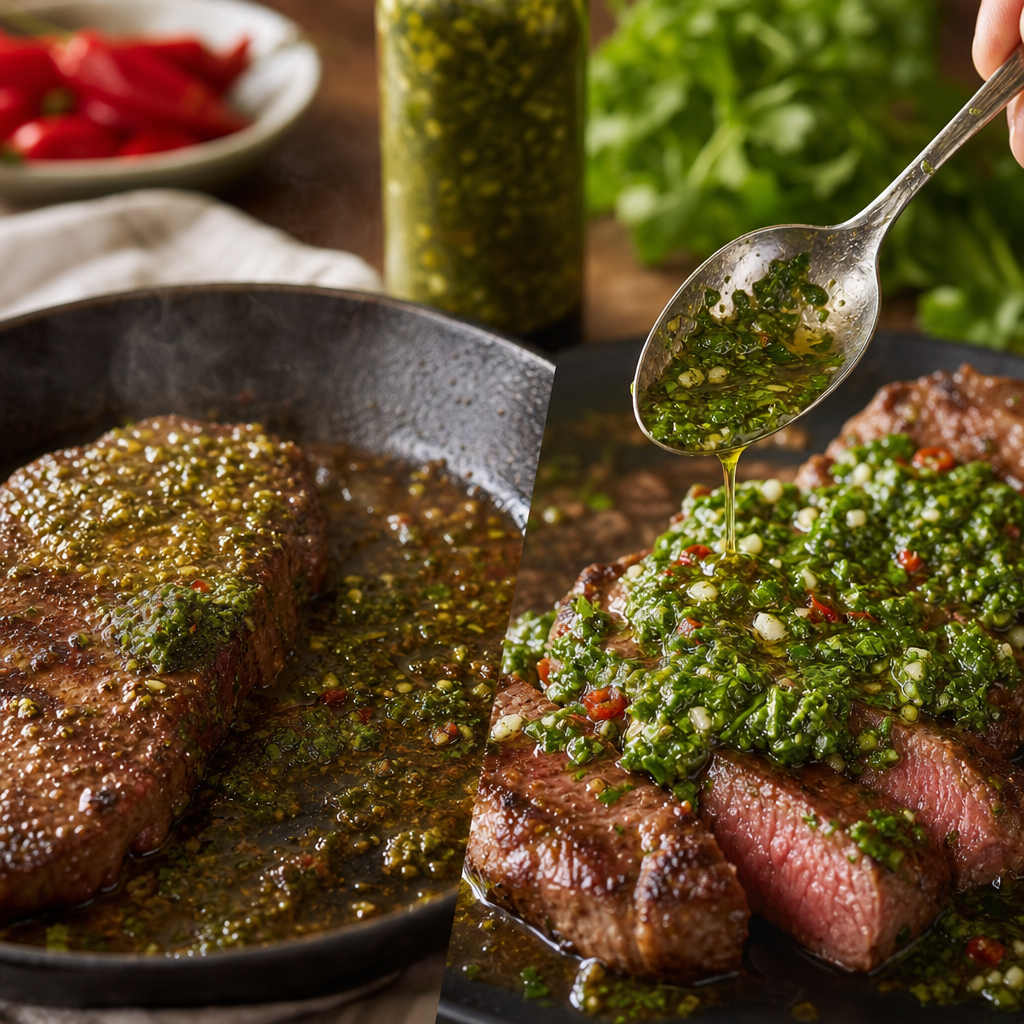
A chimichurri applied during cooking retains only about 40 to 50 percent of its fresh herb character by the time the plate reaches the table. The parsley loses its grassy brightness. The garlic becomes a whisper instead of a presence. The spice balance shifts, with heat-sensitive top notes disappearing and only deeper, earthier compounds remaining.
Our finish-at-the-end approach preserves 85 to 90 percent of the fresh herb characteristics. The parsley stays green and vibrant. The garlic maintains its sharpness and complexity. The spice profile remains balanced and recognizable.
This isn’t theoretical. The difference is obvious when tasted side by side. A steak finished with our Mild Hot Chimichurri in the final seconds has a completely different sensory experience than one that’s been braised or marinated in the same sauce.
The practical benefit: you need less sauce to achieve greater impact. A 1-tablespoon finishing drizzle of our chimichurri delivers more flavor brightness than a 2-tablespoon cooking addition of traditional sauce. For restaurants tracking food costs and portion consistency, this efficiency matters. For home cooks, it means a single bottle lasts longer and tastes better.
The vibrancy also extends to color. Properly finished chimichurri maintains its distinctive green hue, signaling to diners that they’re getting something fresh and carefully prepared. Sauce that’s been subjected to prolonged heat looks darker, browner, and less appetizing.
Comparison Criteria 2: Application Versatility Across Dish Types
Traditional early-addition methods work reasonably well for marinating and braising because the sauce builds flavor gradually into the protein. But this approach creates limitations.
A chimichurri designed to survive cooking temperatures often needs to be formulated differently than one designed to finish fresh. Cooking-friendly versions sometimes require stronger spice notes or more preserved character, which means they taste different when used as a finish.
Our single-formula approach gives you versatility. The same bottle works brilliantly as a marinade for overnight steaks, a dipping sauce for bread and vegetables, a topping for grilled items, or a finishing sauce for hot proteins. You’re not compromising formula for any single application.
This matters across different cooking styles. For grilled meats, finishing allows the char and crust to stay intact while you add fresh flavor on top. For roasted vegetables, a final drizzle at table prevents the herbs from becoming ash-like. For slow-cooked dishes, you can marinate or add during cooking, then finish with fresh sauce just before serving to restore the brightness that long cooking removes.
Restaurants particularly value this flexibility. A single product handles multiple stations and multiple dishes. A kitchen using our chimichurri can marinade beef tenderloin, finish grilled lamb chops, dip roasted potatoes, and top ceviche all with the same bottle. This consistency, combined with the ability to use less product in finishing applications, simplifies inventory and reduces waste.
The versatility extends to working across different flavor profiles too. Our Caribbean and Mediterranean varieties offer different finish options depending on the cuisine you’re working with, without requiring multiple products specifically formulated for different cooking methods.
Comparison Criteria 3: Ingredient Quality and Natural Preservation
This is where artisanal method genuinely separates from conventional approaches.
Traditional commercial chimichurri often relies on preservatives like sodium benzoate or potassium sorbate to maintain stability during cooking and extended shelf life. These work functionally, but they can create a slightly processed taste and limit the clean-label appeal increasingly important to quality-focused kitchens.
Our formula uses natural preservation through ingredient selection and technique rather than chemical additives. We start with the highest-quality parsley, garlic, and spices. We use a specific vinegar balance that creates a naturally preservative environment. Our xanthan gum stabilizes the formula without artificial thickeners or binders. We maintain Kosher certification and exclude all artificial flavors and preservatives.
This approach requires more precision and care. You can’t just mix herbs and oil and expect stability. You need the right acidity, the right spice ratios, the right ingredient sourcing. But the payoff is a sauce that tastes like fresh herbs in a bottle, not like a preserved product.
For restaurants and food service operations, this matters because it supports their own clean-label positioning. If you’re marketing grass-fed beef or farm-to-table vegetables, finishing with a sauce that contains artificial preservatives undermines your story. Our Kosher, natural-ingredient formula aligns with the quality promise you’re making to customers.
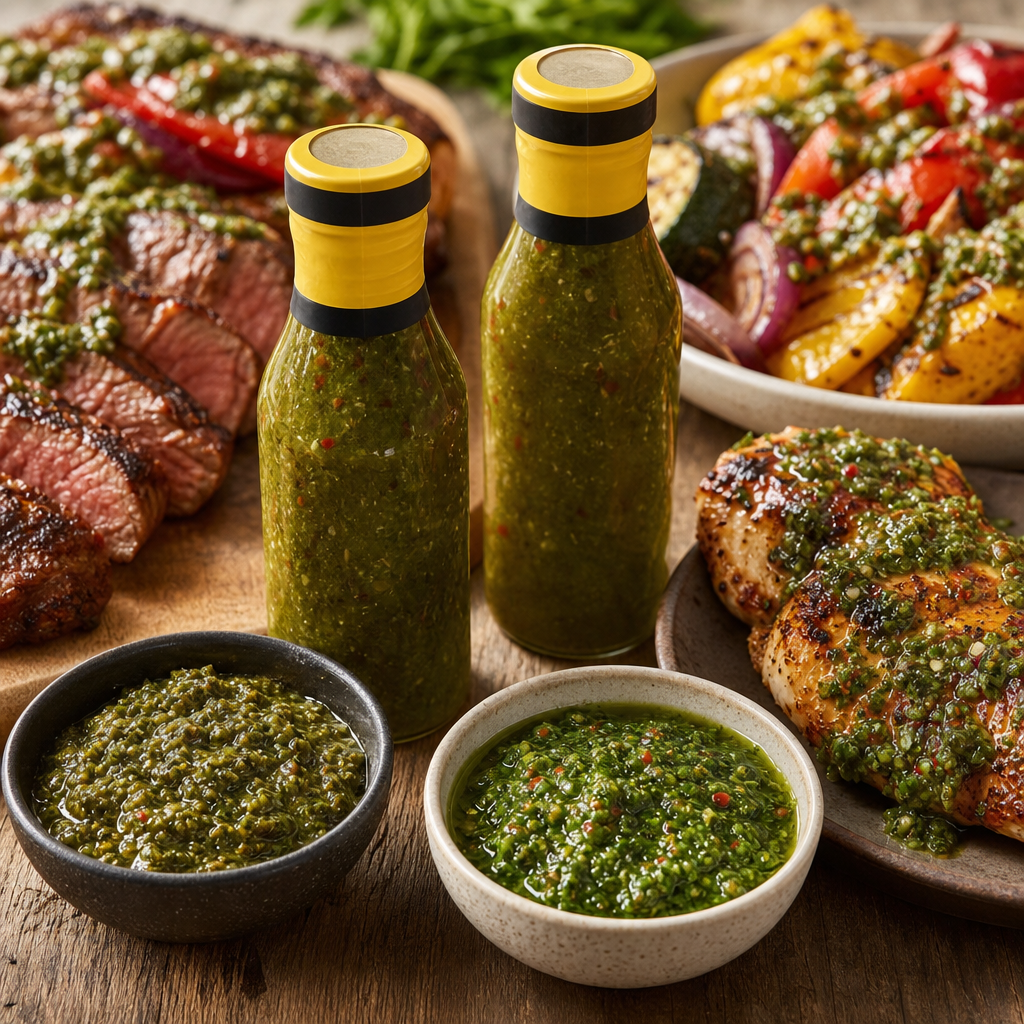
The ingredient quality also means shelf stability without sacrifice. Our 12-month retail shelf life on chimichurri comes from proper formulation, not from cooking the life out of the product. When you open a bottle that’s been sitting for nine months, it tastes like it was made last week.
How Our Gaucho Ranch Chimichurri Maintains Freshness Under Heat
Our specific formula and production method create a unique advantage in heat-stable finishing applications.
We start with fresh parsley that’s been carefully sourced and immediately processed. Unlike some commercial operations that dry herbs before use, we work with fresh material and apply techniques that preserve its character. The garlic comes in as fresh cloves, not aged powder. The spice blend is mixed fresh in-house, not warehoused as a pre-made component.
The vinegar we use isn’t just for flavor. It’s selected for its acidic properties and specific chemical composition. Acidity stabilizes the aromatic compounds in fresh herbs, preventing the oxidation that causes flavor fade. But not all vinegars are equal. The type, age, and processing of vinegar changes how effectively it preserves herb character under heat.
Our xanthan gum is food-grade and used minimally. It provides just enough viscosity and stability without creating that overly thick, syrupy mouthfeel that marks lower-quality products. This also helps preserve the fresh taste because we’re not coating the palate with excessive thickener.
The soybean oil we use is highly refined for clarity and neutral flavor. This is important because any oil harshness or flavor would compete with the fresh herbs. The oil also plays a preservation role, providing a protective coating around herb particles that slows oxidation.
The combination of these elements means our chimichurri can be applied to food at 150 degrees, 200 degrees, or even hotter without rapidly degrading. It handles the initial heat shock without losing character, then settles into the dish and mingles with other flavors rather than becoming overwhelmed by them.
We test this rigorously. Samples of our chimichurri are applied to surfaces at various temperatures and measured for flavor compound retention over time. We compare the volatile aroma profiles immediately after application and again after five, ten, and fifteen minutes. This data drives our formulation decisions and confirms that our approach delivers real, measurable flavor preservation.
Real-World Applications: Meats, Vegetables, and Hot Proteins
The difference between traditional and finish-at-the-end methods becomes obvious when you see it in action across different dishes.
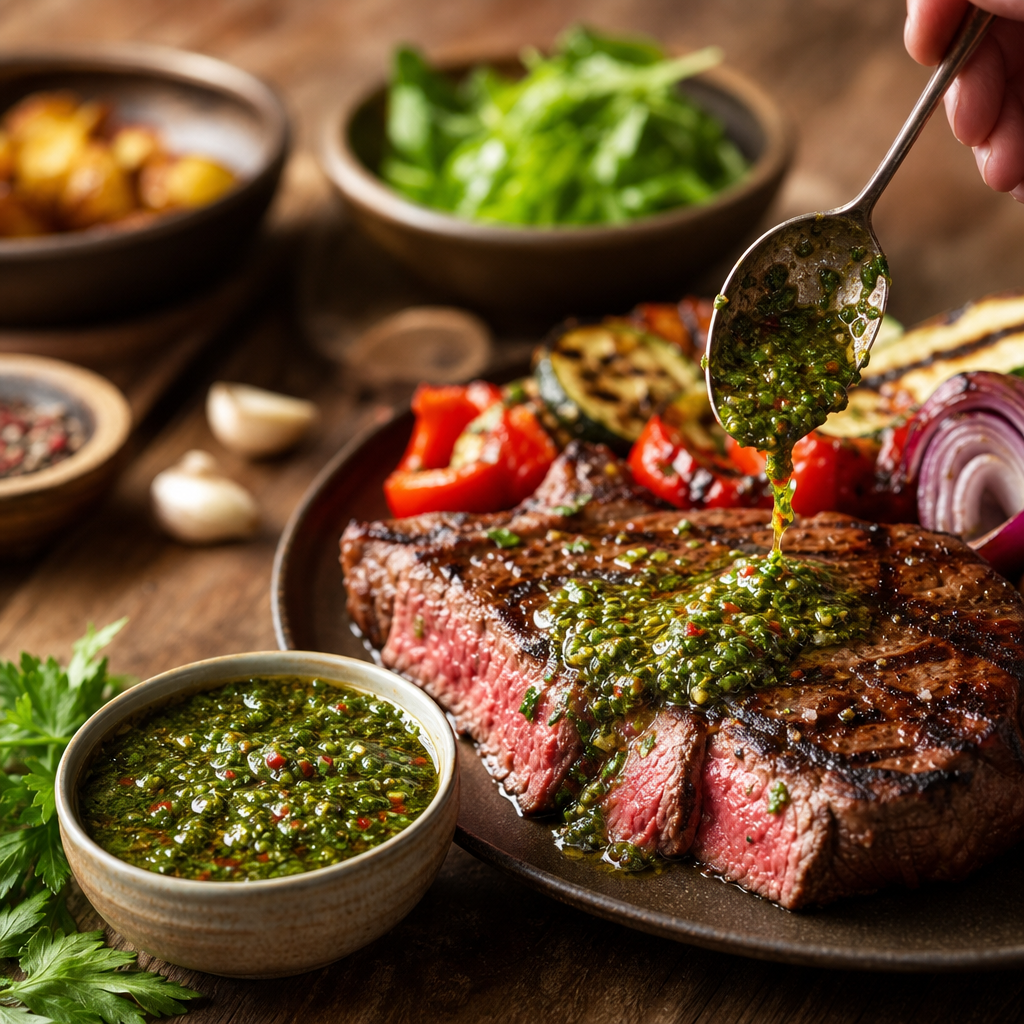
For grilled steak, the traditional approach might marinate the meat overnight in chimichurri, then add more sauce during the final minutes of cooking. The meat does absorb some flavor, but the char and crust become slightly compromised by the moisture and acidity. With finishing, you sear the steak without the sauce, develop a beautiful crust, then drizzle chimichurri over it as it rests. The flavors are brighter, the texture is better, and the visual presentation is more refined.
For roasted lamb or chicken, early addition of chimichurri can actually inhibit browning because the acidity and moisture slow the Maillard reaction. Finishing instead means you get full caramelization first, then bright herb notes on top. A 30-second application of our sauce to a resting bird creates more flavor impact than marinating would achieve.
For grilled vegetables, heat-sensitive herbs are particularly important. Zucchini, peppers, and eggplant can taste one-dimensional coming off the grill. A finish with chimichurri restores complexity and brightness. Applied just before serving, it mingles with the warm vegetables without losing character. The contrast between the heat of the vegetable and the fresh coolness of the sauce is part of the sensory appeal.
For slow-cooked beef or lamb, finishing becomes essential for flavor recovery. A braise develops deep, rich flavors but often loses brightness and fresh herb character. Finishing with chimichurri is like adding a final chapter to the dish. The sauce doesn’t mask what came before; it complements and refreshes it.
For seafood, which is often cooked quickly over high heat, finishing is nearly always the best approach. A fish fillet gets drizzled as it comes off the fire. The warmth of the fillet is just enough to bring out the chimichurri’s aromatics without cooking away the fresh herb character. The result is a dish that tastes composed and intentional.
For service in professional kitchens, finishing also creates consistency. Every plate gets the same application of sauce at the same temperature. There’s no variation from marinating times or changes in how sauce was added during cooking. Quality and consistency increase.
Why Our Artisanal Recipe Outperforms Conventional Finishing Methods
The difference between artisanal and conventional approaches isn’t subtle. It’s reflected in every aspect of how the sauce behaves and tastes.
Conventional commercial chimichurri is often optimized for ease of manufacture and extended shelf life. Large-scale production means processing speeds, ingredient sourcing efficiency, and formulations that prioritize stability over freshness. Many conventional brands use dried herbs instead of fresh, pasteurization or high-temperature processing to extend shelf life, and preservative systems designed to tolerate rapid temperature changes.
These choices make sense from a manufacturing perspective. Dried herbs are shelf-stable, don’t require refrigeration, and cost less. Pasteurization kills pathogens and extends product life. Preservatives prevent spoilage in widely distributed products that might sit in warehouses for months.
But they come with compromises. Dried herbs lose volatile aromatic compounds during the drying process. Once those compounds are gone, no amount of blending or processing brings them back. Pasteurization itself damages heat-sensitive aromatics. Stronger preservatives or processing techniques can create a slightly cooked or medicinal taste.
Our artisanal approach prioritizes freshness at every step. We work with smaller batches, which allows us to start with the highest-quality fresh ingredients and apply gentler processing. We use natural preservation through formulation rather than heavy-handed chemical systems. We maintain careful temperature control throughout production to protect volatile compounds. We distribute to market quickly rather than warehousing product.
This means opening a bottle of our Gaucho Ranch chimichurri is a different experience than opening a conventional brand. You smell the fresh parsley immediately. The color is vibrant green, not brownish. The taste is herbaceous and alive, not muted or processed.
From a finishing perspective, this matters because your final dish is only as good as the sauce you apply. A conventional sauce might work adequately as a marinade or cooking ingredient, where it gets absorbed and integrated. But as a finishing element, where it’s the last thing tasted and the most visible component of the dish, freshness and brightness are everything. Our artisanal formula delivers both.
Making the Switch: Implementation Tips for Your Kitchen
If you’ve been using chimichurri primarily as a cooking ingredient or marinade, shifting to a finish-focused approach requires a few practical changes.
Start by rethinking when you apply the sauce. Instead of adding it during cooking, apply it in the final 30 to 60 seconds before the dish leaves the kitchen or comes to the table. If you want a marinating element, that can still happen, but consider using less sauce for a shorter time, then saving fresh sauce for finishing.
Adjust quantities. Because finished sauce stays bright and flavorful, you need less of it to achieve greater impact. What used to be a 2-tablespoon per-plate portion might now be 1 tablespoon. This adjustment takes a few attempts to dial in, but once you’ve found the balance, consistency improves and food cost decreases.
Train your team on application technique. Finishing sauce should be drizzled or spooned thoughtfully, not dumped or mixed aggressively. The goal is to distribute it across the surface so it mingles naturally with the warm food without overwhelming it. A light hand works better than a heavy one.
Consider temperature. Finishing works best when food is warm but not screaming hot. A plate that’s been at 180 degrees for a few minutes is ideal. Food that’s just off the flame at 200-plus degrees is still acceptable, but the sauce will be slightly more affected by the heat. Let hot dishes rest briefly before finishing for optimal results.
Test across your menu. You might find finishing works brilliantly for some items and less so for others. Grilled items almost always benefit. Fried items sometimes do better with sauce on the side. Soups and braises might need finishing combined with other applications. Let the dish guide your approach rather than treating every application the same.
Keep fresh-opened bottles in a cool place. Our shelf-stable formulation doesn’t require refrigeration, but once opened, cooler storage helps the sauce maintain optimal flavor and color. Use within a reasonable timeframe after opening.
Why Cordoba Foods is Your Heat-Stable Chimichurri Partner
We’re a family-owned company deeply rooted in authentic Argentinian food traditions. That heritage isn’t just a marketing angle. It means we understand chimichurri at a level that goes beyond what commercial research can teach.
Gaucho Ranch chimichurri comes from a place of genuine culinary respect. We’ve spent years refining how to preserve the essence of fresh herbs while creating a product that performs reliably in professional kitchens, restaurants, and home settings. Our Kosher certification, natural preservation without artificial additives, and commitment to quality ingredients aren’t compromises we’ve made. They’re the foundation of who we are.
Our formula is specifically designed for heat-stable finishing. When you use our chimichurri as a final application, you’re using a product engineered for that purpose, not a general-purpose sauce that merely tolerates finishing. The difference in how it performs and tastes is real.
We offer flexibility in format too. Our 12.5-ounce bottles work perfectly for retail and home kitchens. Our 2-gallon jugs serve restaurant and food service operations that finish high volumes. Whether you’re plating three steaks or three hundred, we have a size that fits your needs.
Beyond the product itself, we’re committed to supporting your culinary goals. We understand that finishing technique is about more than sauce. It’s about intention, respect for ingredients, and the desire to serve food that tastes genuinely fresh and alive.
When you choose Cordoba Foods, you’re choosing a partner who believes that fresh herb brightness matters. You’re choosing a product that’s been formulated, tested, and refined specifically for the moment when sauce becomes the final statement on a dish. You’re choosing chimichurri that delivers the promise of authentic Argentinian flavor without compromise.
Your next grilled steak, roasted vegetable, or finished protein deserves a sauce that’s as good as the ingredient itself. We’ve built Gaucho Ranch chimichurri to deliver exactly that.