1. Syrup Consistency: Perfect for Drizzling and Decorating
Dulce de leche is one of those magical ingredients that transforms a simple dessert into something memorable. But here’s what most home cooks and professional chefs don’t realize: not all dulce de leche is created equal, and texture matters just as much as flavor.
We’ve learned this lesson the hard way over years of perfecting our N’DULCE Dulce de Leche line. A texture that works beautifully drizzled over ice cream might be completely wrong for a pastry filling. A consistency that spreads perfectly on toast could slide right off a cake layer. Understanding the differences between dulce de leche textures isn’t just about convenience, it’s about getting the results you’re actually after.
The right texture transforms how your ingredient performs in the kitchen. It determines whether you’ll nail that bakery-style consistency in your alfajores, achieve the perfect spread in a sandwich, or create that Instagram-worthy drizzle on your dessert plate. Let’s walk through each texture option and show you how to match the right consistency to your culinary vision.
Imagine a dulce de leche that flows like warm honey, coating a spoon with a thin, glossy layer that moves with gravity. That’s our syrup consistency, and it’s specifically designed for applications where you want movement and visual drama.
This lighter texture excels in pastry shops and upscale dessert presentations. A chef might use it to create elegant swooshes across a plated flan, or a home baker could drizzle it in thin lines over brownies or churros. It won’t pool or clump, and it sets minimally, which means it stays workable for longer. This consistency also works beautifully as a topping for ice cream, pancakes, and waffles, where you want that luxurious coating without heaviness.
The key advantage here is visual impact combined with ease of application. You can work quickly without worrying about the dulce de leche setting before you’re done. Professional pastry chefs love this texture because it photographs beautifully and requires no special equipment to apply.
Our Dulce de Leche Syrup gives you that restaurant-quality pour straight from the jar. No thinning, no heating, no guesswork.
2. Spreadable Texture: Ideal for Sandwiches and Soft Fillings
Now shift your thinking to something thicker, something you can actually spread with a knife. This is where our spreadable texture lives, and it’s the texture for everyday enjoyment and handheld desserts.
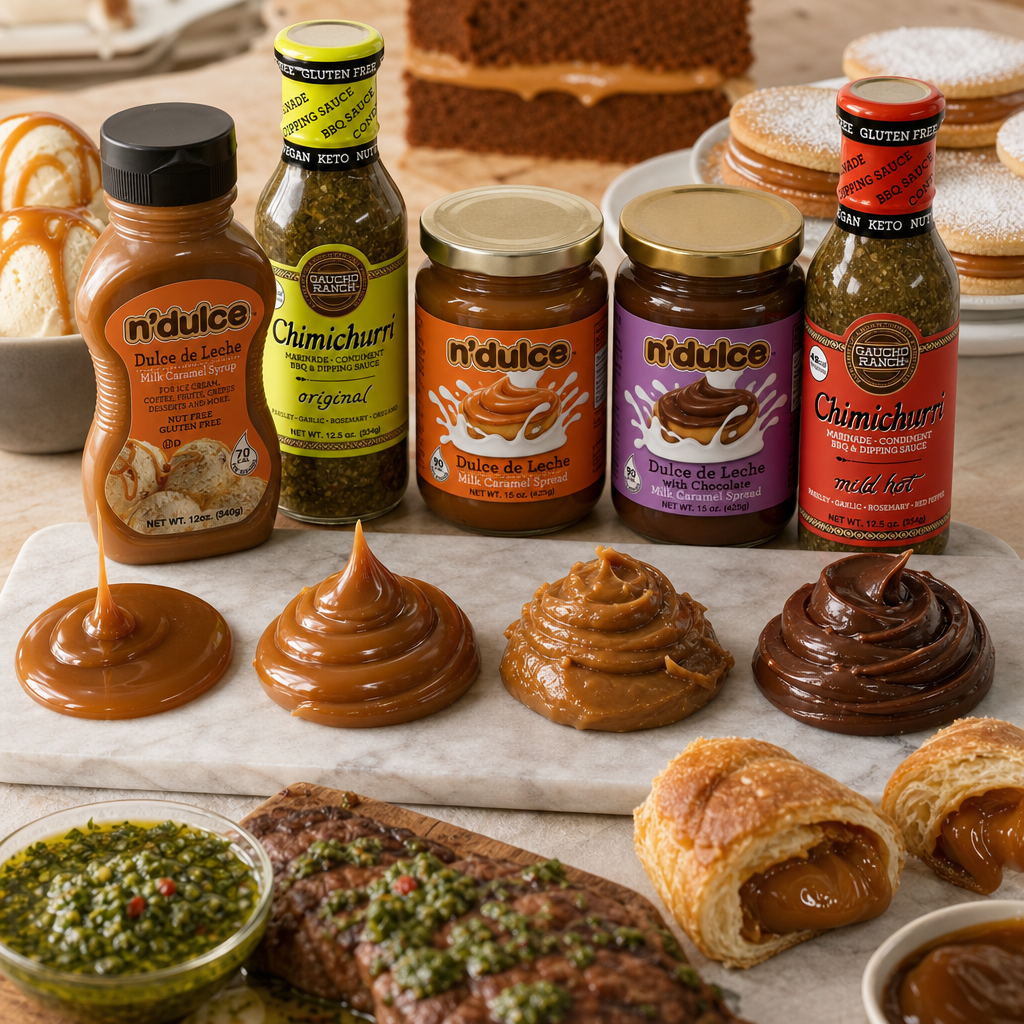
A spreadable dulce de leche has enough body to hold its shape on a slice of bread, but it remains soft enough to apply without tearing or crumbling what you’re filling. Think of it as the ideal consistency for layering inside alfajores, spreading on scones, or creating that indulgent dulce de leche and cream cheese sandwich that’s become increasingly popular at cafes and bakeries.
What makes this texture special is its balance. It’s thick enough to be a true filling ingredient, but not so rigid that it fights back when you’re trying to work with it. Bakers often prefer this consistency for cakes that need a stable layer between sponge or pound cake components. Home cooks appreciate it because a simple jar is all you need, no adjusting, no thinning.
Our Dulce de Leche Spreadable gives you that genuine spread-and-enjoy convenience. It’s what happens when tradition meets modern kitchen reality.
3. Multipurpose Dulce de Leche: The Versatile Thick Option
There’s a reason some dulce de leche formulations have stayed popular for generations: they’re genuinely multipurpose. This thicker, more substantial version sits between spreadable and paste-like, giving you a middle ground that works across multiple applications.
This texture is the workhorse of professional kitchens. It’s thick enough to hold a piping bag shape for decorating, sturdy enough to use as a cake filling that won’t squish out under frosting pressure, yet soft enough to fold into whipped cream or blend into a mousse. It becomes the versatile player that means you’re buying one product instead of three.
Many pastry chefs and commercial bakeries depend on this kind of consistency precisely because it reduces inventory complexity. You’re not buying multiple dulce de leche variations. You’re buying one that handles the majority of your needs. For the home cook experimenting with different recipes, this same versatility is liberating.
4. Bakeable Formula: Heat-Resistant Excellence for Professional Kitchens
Here’s where texture becomes a technical requirement rather than just a preference: the bakeable formula. This is dulce de leche specifically engineered to withstand oven temperatures without breaking down, separating, or changing texture in ways that ruin your final product.
Professional bakeries face a real problem. Standard dulce de leche can weep, separate, or become too thin when exposed to sustained heat. A bakeable formula maintains its integrity through the baking process. Whether you’re baking alfajores that need a perfectly stable filling, creating a dulce de leche swirl cheesecake, or making layered pastries that spend time in the oven, this texture is formulated to perform.
The difference comes down to ingredient structure and formulation. A bakeable dulce de leche has been specifically designed to hold together under temperature stress. This isn’t a thicker regular dulce de leche, it’s a fundamentally different product engineered for the demands of commercial and advanced home baking.
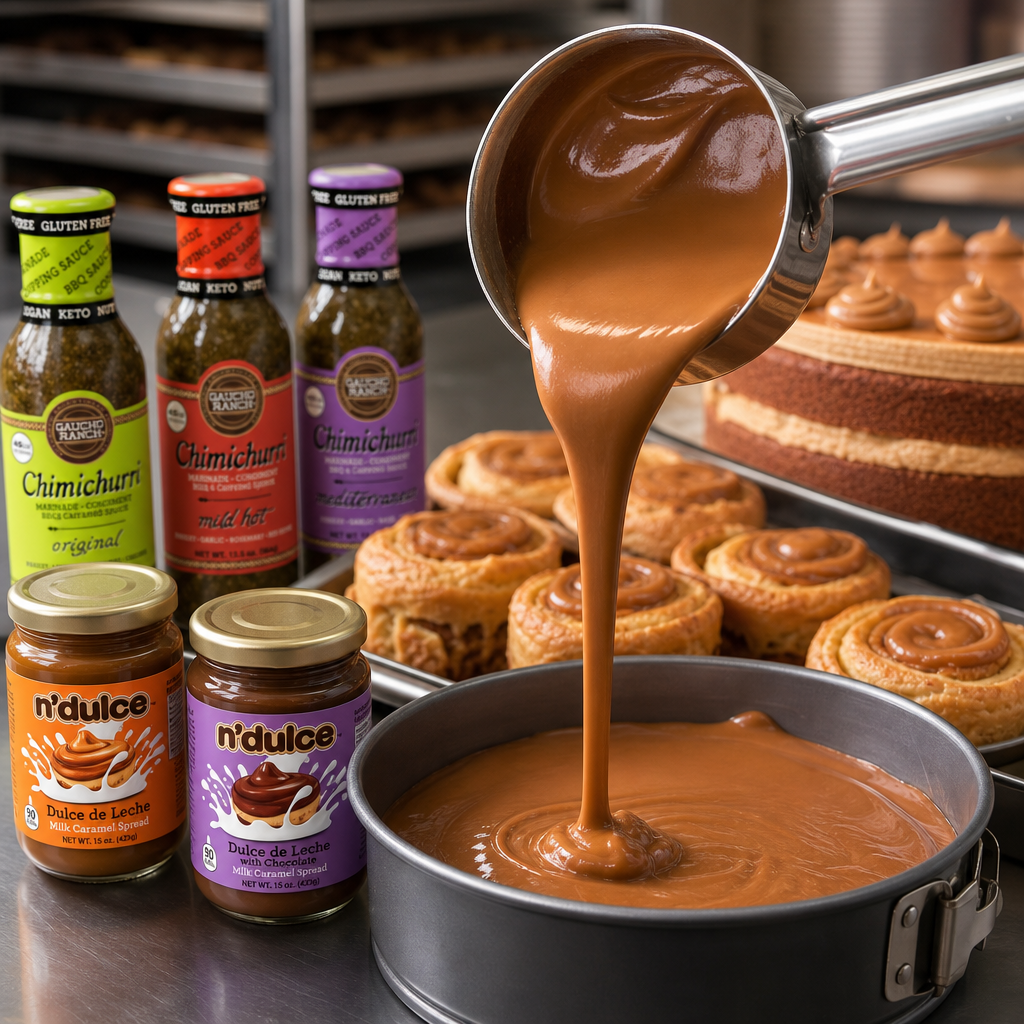
If you’re doing anything beyond room-temperature applications, a bakeable formula protects your results. It removes the guesswork and the potential for disappointing textures mid-recipe.
5. Why One-Texture Solutions Fall Short
Here’s the honest truth we’ve discovered through years of working with customers, bakeries, and food service operations: a one-size-fits-all approach to dulce de leche texture creates real problems.
When a single product tries to be everything, it’s usually perfect for nothing. A texture optimized for drizzling runs off a cake. A consistency thick enough for a stable filling won’t coat your spoon properly over ice cream. A spreadable option might be too soft for piping. A bakeable formula engineered for oven use might feel heavy when you just want something to swirl into whipped cream.
Customers end up improvising. They thin their dulce de leche with cream or milk. They heat it. They add cornstarch. They work around the product instead of working with it. This creates inconsistency in results and honestly, it wastes the ingredient’s potential.
The real cost isn’t just in your time, it’s in your finished product quality. That homemade alfajore that doesn’t quite hold together. The cake that looks beautiful in concept but the filling behavior didn’t match your vision. The ice cream sundae where the topping sits in a thick blob instead of creating that elegant flow.
6. Our Four-Consistency Approach: Meeting Every Culinary Need
We built our N’DULCE Dulce de Leche collection around a simple observation: real cooks need real solutions, not compromises. Instead of forcing one texture to handle everything, we’ve developed four distinct consistencies, each optimized for specific culinary applications.
Our approach started with listening to what bakers, chefs, and home cooks actually needed. A pastry chef mentioned needing something that would create clean lines without requiring specialized equipment. A bakery owner asked for a filling that could survive the oven without changing texture. A home cook wanted something that would spread on toast as easily as jam but perform as a stable cake filling.
That’s how we arrived at our core lineup: syrup for drizzling and decorating, spreadable for everyday applications and soft fillings, multipurpose for the versatile middle ground, and bakeable for oven applications. Each one is made with our authentic Argentine recipe, using natural ingredients and no artificial flavors or preservatives. Each one is also kosher, gluten-free, and nut-free.
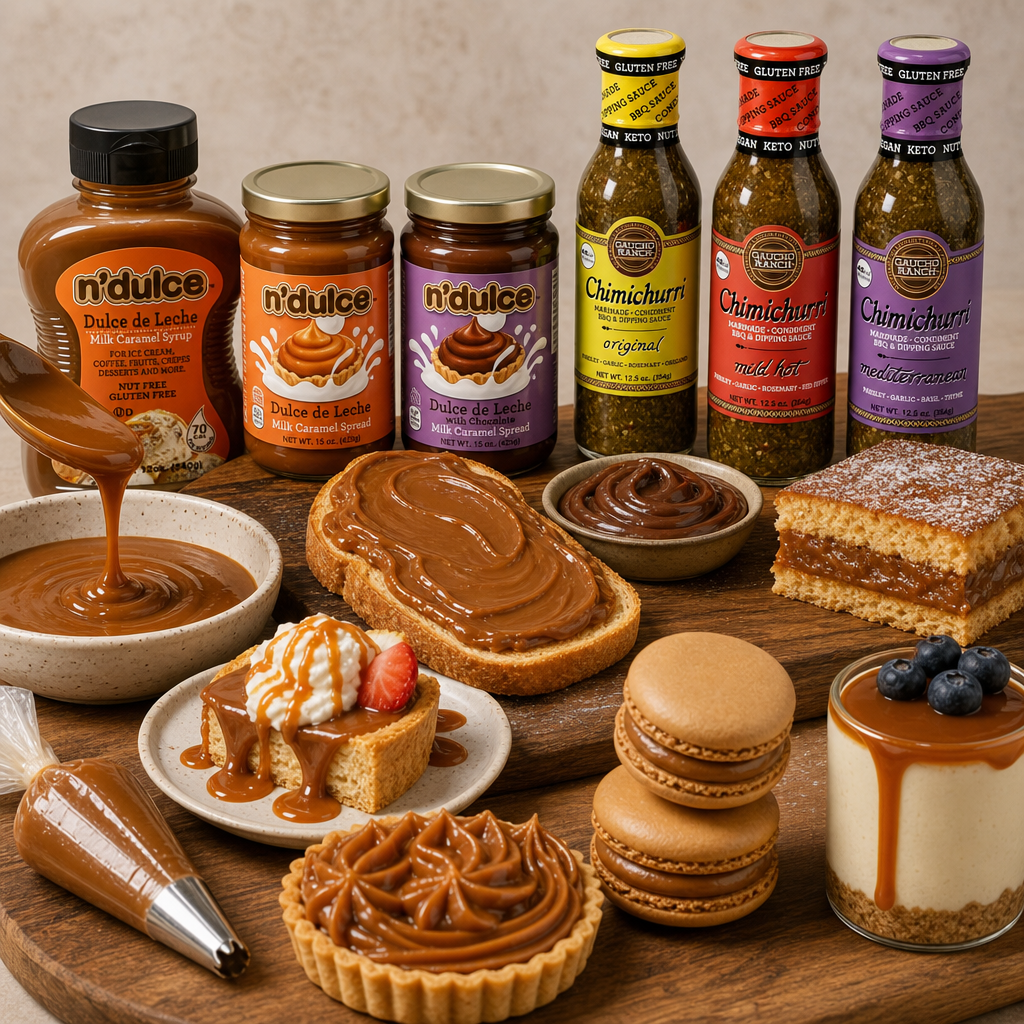
The real advantage is freedom. You’re not improvising around product limitations. You’re choosing the texture that matches your actual need, and you’re getting a product engineered to perform in that exact scenario.
7. Choosing the Right Texture for Your Recipe or Business
Let’s make this practical. Here’s how to match texture to your situation:
For plated desserts and visual presentation: Choose syrup consistency. You want that graceful pour, that elegant coating, that professional appearance. This is your answer for upscale presentations where visual impact matters as much as flavor.
For sandwiches, toast, scones, and simple spreads: Choose spreadable. This is the everyday texture. It’s what you reach for when you want indulgence without complications. It’s also perfect for the filling layers in alfajores and similar handheld pastries.
For general baking and multiple applications: Choose multipurpose thick. If you’re someone who makes different things throughout the year, one jar of this texture handles most scenarios. It’s the balanced choice for home bakers and smaller commercial operations.
For oven-based applications: Choose bakeable formula. If you’re baking with dulce de leche, if you’re creating pastries that spend time in the oven, this is where texture meets engineering. This protects your results.
Our recommendation: start by thinking about your most common use case. Are you primarily decorating? Go syrup. Are you primarily filling? Go spreadable or multipurpose. Do you bake with dulce de leche regularly? Go bakeable. Your texture choice should serve your cooking style, not fight against it.
We’ve spent years perfecting these four options because we believe dulce de leche should feel effortless. When the texture is right, the ingredient does what you ask of it. Your alfajores stay together. Your ice cream sundae looks restaurant-quality. Your cake filling performs exactly as imagined.
That’s when the ingredient shines, and that’s when you remember why you chose dulce de leche in the first place.
Contact us for retail and foodservice inquiries at 877-240-3744