The Chimichurri Timing Problem Most Home Cooks Face
You’ve got your meat ready, your grill heating up, and a bottle of chimichurri in hand. Then the questions hit: Should I marinate this for hours? Minutes? Should I brush it on at the end? The truth is, most home cooks treat chimichurri like a one-note condiment, when it’s actually a versatile tool that works at every stage of cooking.
We see this hesitation constantly. People either soak their meat overnight in chimichurri and wonder why the flavors taste muted, or they slather it on right before serving and miss the depth that time creates. The reality is that chimichurri performs differently depending on when and how you apply it, and understanding these differences transforms how you approach grilling.
The good news? There’s no single “right” way. Instead, there are intentional choices that deliver specific results. Once you understand the why behind the timing, you’ll naturally make the call that suits your ingredient, your hunger, and your time constraints.
Why Chimichurri Works Both Ways: Science Behind the Sauce
Chimichurri’s magic lies in its composition. We craft ours with fresh herbs, garlic, vinegar, and oils, creating a sauce that functions as both a tenderizer and a flavor amplifier. The vinegar contains acidity that breaks down protein fibers, while the herbs and garlic infuse flavor through direct contact and oil absorption.
Here’s what happens at different timescales:
During marinating (hours): The acidic vinegar works on the meat’s surface and gradually penetrates deeper layers. Enzymes in the garlic and herbs begin enzymatic action, which softens tough muscle fibers. This is why longer marinades create tender, juicy results. The oil carries fat-soluble flavor compounds into the meat itself.
During finishing (minutes): Fresh application at or near the end of cooking deposits flavor on the exterior where taste buds encounter it first. The heat from the meat slightly warms the sauce, releasing volatile aromatic compounds. You get a bright, immediately impactful flavor profile.
The sweet spot: The best approach often combines both. A moderate marinade prepares the meat while a fresh finishing layer captures that vibrant herbaceous punch people crave in authentic chimichurri.
The acidity is gentle compared to vinegar-heavy marinades, so over-marinating won’t turn your meat to mush. However, there’s a difference between tender and optimal, and timing helps you hit that mark reliably.
Marinading with Chimichurri: Building Deep Flavor from Within
When you choose to marinate, you’re making a deliberate statement about flavor depth. The process works best with cuts that benefit from tenderizing and flavor penetration: tougher cuts like flank steak, skirt steak, chicken thighs, or even tougher beef cuts improve noticeably with marinating.
The marinade acts as a flavor delivery system. The oil coats the meat’s surface and slowly carries aromatics inward. The acid loosens the protein structure, creating tiny pathways where flavor compounds travel. Over time, the meat doesn’t just taste like it was exposed to chimichurri; it tastes like chimichurri has become part of it.
For best results, submerge your meat in a shallow dish or zip-top bag. Use enough chimichurri to coat all surfaces generously, then ensure at least some liquid pooling at the bottom. Turn the meat halfway through if possible, though this isn’t critical.
The environment matters too. Room temperature marinades work faster because enzymes are more active in warmth. Refrigerated marinades progress more slowly, giving you more control over timing and allowing longer marinating windows without oversaturation. If you’re marinating at room temperature, plan shorter windows. In the refrigerator, you can afford more time.
How Long to Marinate: The Perfect Timing for Maximum Impact
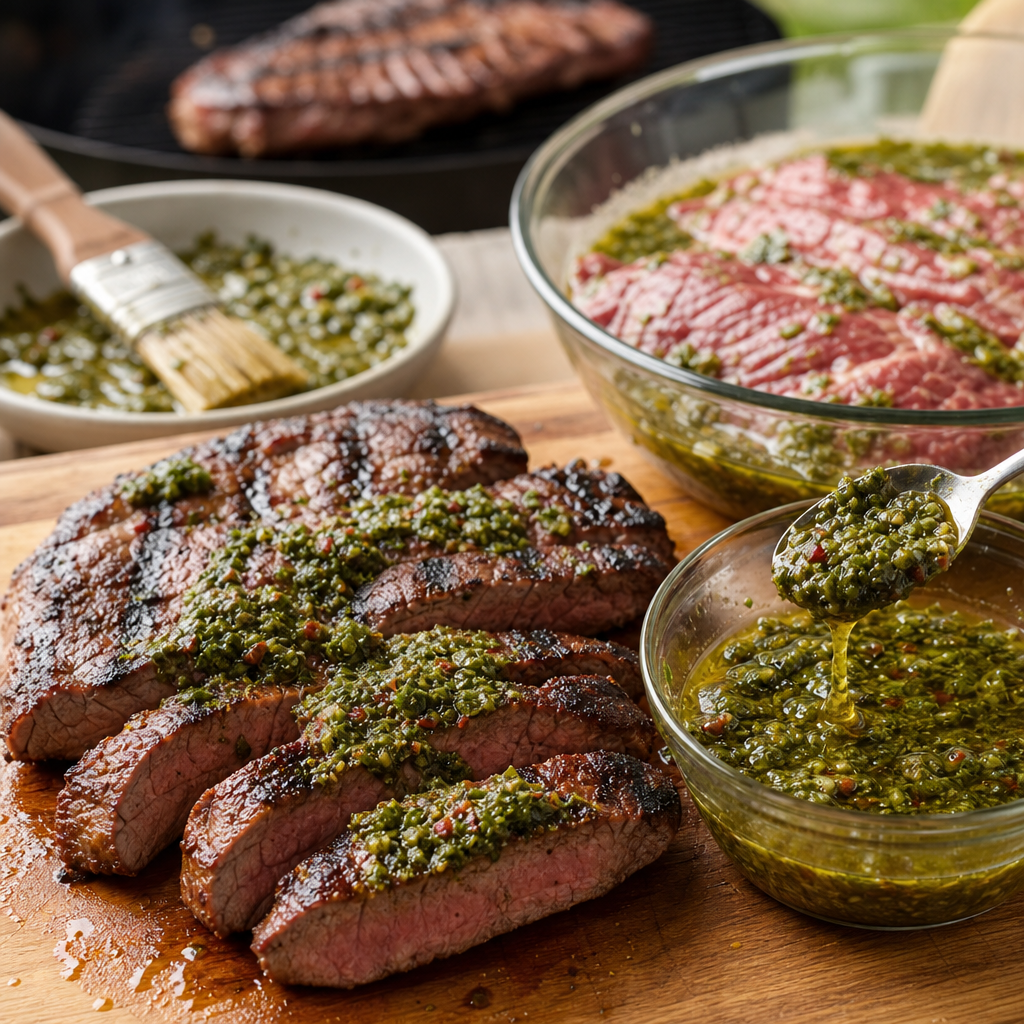
The question everyone asks: how long is too long?
For chicken, aim for 30 minutes to 2 hours at room temperature, or 2 to 8 hours refrigerated. Chicken’s delicate texture benefits from extended marinating, but its mild flavor can become overpowered if left too long. Two hours hits the sweet spot where the meat becomes tender and absorbs significant flavor without tasting one-note.
Beef responds beautifully to longer marinating. Flank steak or skirt steak, which are naturally lean and muscular, benefit from 4 to 12 hours refrigerated. The extended time truly transforms the texture and creates depth. Thicker cuts like ribeye or New York strip need less time; 2 to 4 hours is sufficient because their marbling and tenderness require less assistance.
Pork falls between the two. Lean cuts like pork tenderloin do well with 2 to 4 hours. Tougher shoulder cuts can handle 6 to 8 hours. Pork also absorbs and holds flavors exceptionally well, so you’ll see returns even from shorter marinades.
The practical reality? If you’re marinating in the refrigerator, start in the morning for evening cooking or overnight for next-day service. Most home cooks find 4 to 6 hours of refrigerated marinating delivers excellent results without requiring day-ahead planning.
Beyond 24 hours, the returns diminish. The sauce’s flavor peaks at about 12 hours and gradually mellows afterward. The meat doesn’t spoil, but the chimichurri’s vibrant character softens. If you’re planning ahead, 8 to 12 hours is your target window.
Diluting Chimichurri for Marinades: Our Method for Balanced Results
Here’s a technique that changes everything: diluting your chimichurri for marinades creates more even penetration and prevents overwhelming the meat’s natural flavors.
We recommend mixing one part chimichurri with one part neutral oil (olive oil works beautifully) for your marinating liquid. This ratio maintains the flavor profile while increasing volume, ensuring complete submersion without oversaturation. The additional oil carries the original sauce’s aromatics deeper into the meat.
For beef, you can go stronger: a 60/40 chimichurri-to-oil ratio works well because beef’s robust flavor can handle intensity. For chicken or pork, we prefer the 50/50 split to preserve the meat’s subtle character while building chimichurri’s foundation.
Add a splash of vinegar if you want extra tenderizing power, especially for tougher cuts. This mirrors traditional Argentinian preparation and gives you another variable to control. Start with one tablespoon of vinegar per cup of marinade and adjust based on your preference.
This dilution method serves another purpose: economy. You use less product per marinade while achieving better results, and you create a flavorful liquid that won’t be wasted as drippings.
Finishing with Chimichurri: The Art of Last-Minute Flavor Boost
Now for the finishing layer, where chimichurri becomes the final statement on your plate.
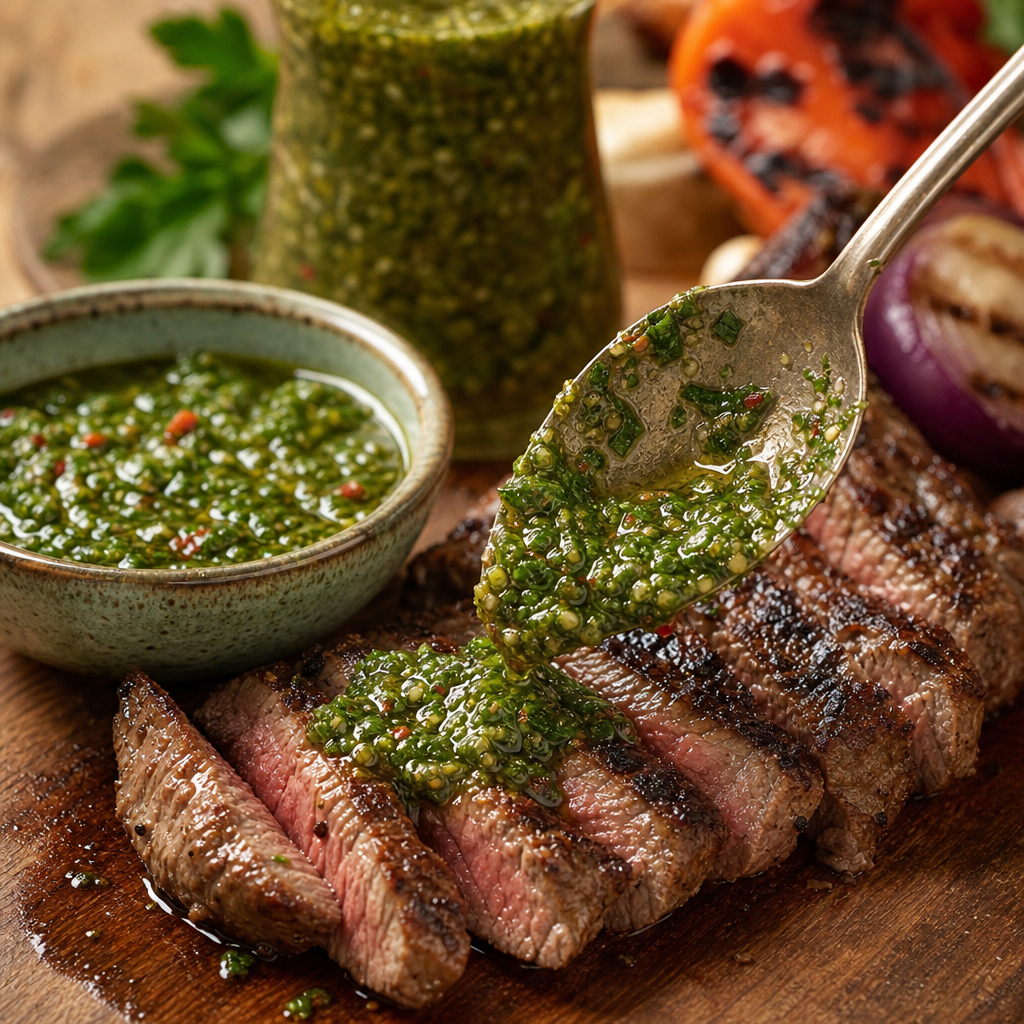
Apply finishing chimichurri during the last 2 to 3 minutes of cooking or immediately after the meat leaves the grill. The residual heat warms the sauce just enough to bloom its aromatics without cooking off the fresh herbaceous notes that make chimichurri distinctive. You want that bright, peppery, garlicky punch to be the last thing your palate encounters.
The magic of finishing lies in timing with the meat’s resting. Let your meat rest for 3 to 5 minutes after it leaves the grill (this keeps juices inside rather than on the plate). While it rests, brush or spoon your finishing chimichurri generously across the surface. The warmth of the meat activates the sauce while the brief rest period allows juices to redistribute, creating an ideal canvas for absorption.
For thicker cuts like a whole steak or roasted chicken breast, apply a generous layer. For smaller pieces like kebabs or shredded meat, a light drizzle works best. The goal is to coat without pooling excessively.
The distinction between marinating and finishing sauce is important. For marinating, we suggest diluting. For finishing, use your chimichurri at full strength straight from the bottle. This is where you want maximum flavor impact.
Temperature and Application: Using Our Chimichurri at Every Stage
Temperature control affects how chimichurri delivers flavor and how it behaves on the meat.
For marinating, room temperature or refrigerated preparation both work. Room temperature marinades speed the process but shorten your safe timing window. Refrigerated marinades take longer but give you flexibility. Either way, remove your meat from the refrigerator 15 to 20 minutes before grilling to bring it closer to room temperature. This helps the meat cook evenly and allows the marinating flavors to stabilize throughout the interior.
During grilling, the meat’s exterior heat doesn’t significantly damage chimichurri’s flavor compounds because you’re using it either beforehand (in the marinade, which is internal) or at the very end (which stays external and warm rather than cooked). The brief finishing application is where you have the most control over flavor preservation.
For serving temperature, keep your finishing chimichurri at room temperature or slightly cool. Cold sauce on hot meat creates a pleasant contrast and prevents the aromatic compounds from evaporating too quickly. If your chimichurri has been refrigerated, remove it from the cold 10 minutes before service so it reaches a neutral temperature.
If you’re working with bulk quantities or serving many people, consider warming your chimichurri slightly (never above 120 degrees Fahrenheit) to prevent it from cooling the meat’s surface unnecessarily. This is especially useful in professional or catered settings where timing is compressed.
Flavor Variations for Different Applications: Our Gaucho Ranch Range
We’ve developed our Gaucho Ranch chimichurri line with different applications in mind, recognizing that not all proteins respond identically to flavor intensity.
Our Mild Hot flavor works beautifully for marinating delicate proteins like fish or chicken. The balanced heat level prevents overpowering subtle meat flavors while still building depth over time. The same sauce is excellent as a finishing layer because it adds brightness without aggression.
The Mediterranean flavor takes inspiration from broader Southern European traditions while maintaining chimichurri’s vinegar and herb foundation. It’s particularly suited to lamb, pork, or mushroom-based dishes. The complexity works well in longer marinades where those nuanced flavors have time to develop.
For beef, any of our core varieties work effectively, but we find that home cooks get the most satisfaction using full-strength versions for finishing after a moderate marinade. The robust beef flavor pairs beautifully with our traditional profiles.
Our keto and zero-sugar chimichurri options follow the same timing principles as traditional varieties. These are complete sauces in their own right, not watered-down versions. Use them identically to traditional chimichurri with no adjustments needed.
Consider your protein and your audience when selecting which variation to use for marinating versus finishing. A lighter, more delicate preparation might use the same sauce for both. A bolder preparation might use one variation for marinating and a different one for finishing.
Avoiding Common Mistakes: What We See in Professional Kitchens
After years of seeing how chefs and home cooks use chimichurri, we’ve noticed patterns in what derails results.
The overnight over-marinade: Leaving meat in chimichurri for 24+ hours doesn’t improve the result; it dilutes the flavor. The sauce’s character softens, and the meat’s natural taste becomes muted rather than complemented. Stick to 12 hours maximum for refrigerated marinating.
Marinating and finishing with the same intensity: If you’ve already marinated your meat, a light finishing application works better than a heavy one. You’re layering flavors, not doubling down. A teaspoon per serving after a proper marinade beats a tablespoon per serving.
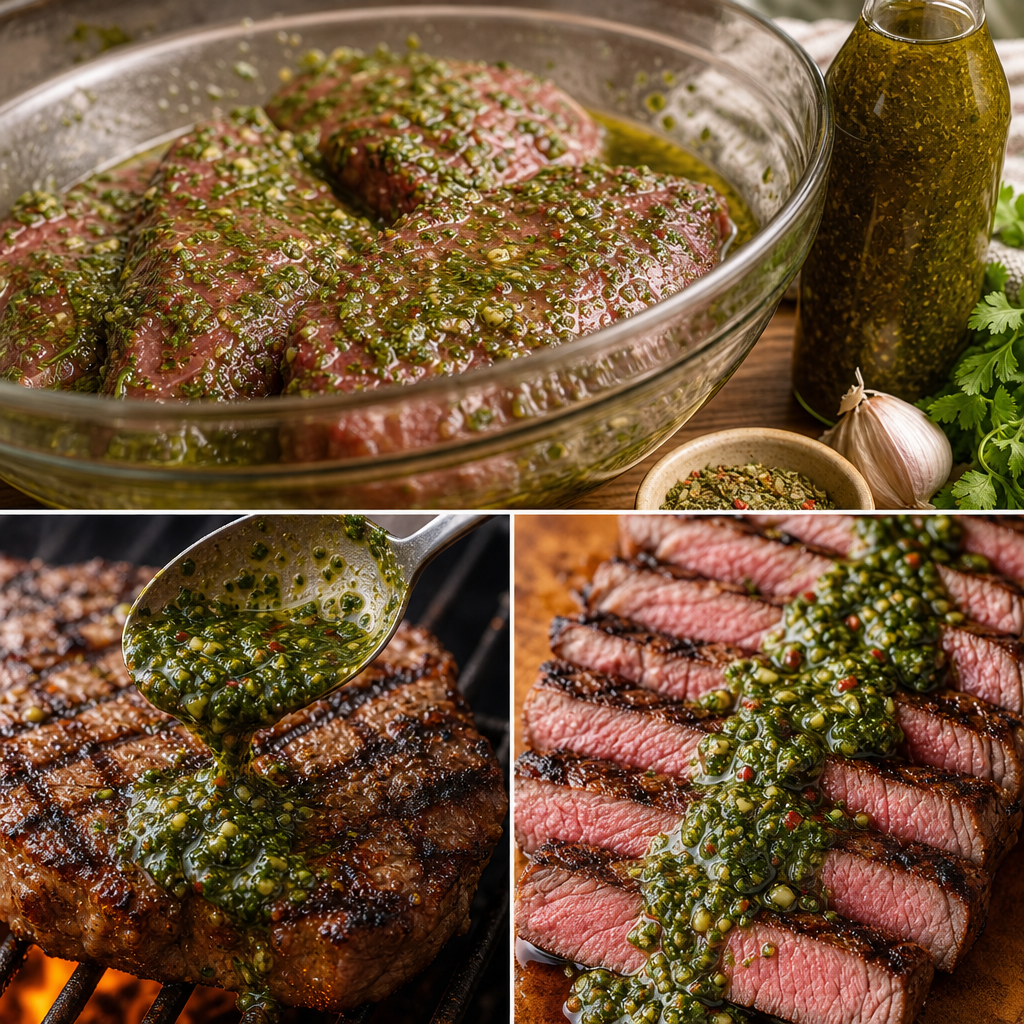
Applying finishing sauce to meat that’s still cooking: This causes the bottom of the sauce to scorch on the meat’s hot surface while the top remains cool. Remove from heat first, then apply.
Forgetting to dilute for marinades: Using straight, undiluted chimichurri as a marinade results in uneven flavor distribution and can overwhelm the meat. The dilution method we described creates penetration rather than crust.
Ignoring the meat’s resting period: Resting is when finishing flavors actually absorb. Skip this step, and your finishing sauce just coats the outside without integrating.
Using cold finishing sauce on hot meat: The temperature differential causes the sauce’s volatiles to evaporate before your palate can register them. Room temperature sauce clings to the hot meat and releases aromatics slowly, where your taste and smell receptors can perceive them.
Creating Consistency in Your Kitchen: Our Solutions for Every Style
The beauty of understanding chimichurri timing is that you can create reliable, repeatable results regardless of whether you’re feeding two or twenty.
Develop a system. If you prefer marinating, choose a consistent timing window (say, 4 hours refrigerated) and build this into your meal prep. Pre-dilute your chimichurri in batches for marinating; mix one part sauce with one part oil in a container that’s ready when you need it. Label it clearly and date it so nothing goes to waste.
If finishing is your preference, keep a bottle of full-strength chimichurri near your grill. No dilution needed; no preparation required. Your sauce is ready the moment your meat is.
Many experienced cooks we know do both: a short marinade (2 to 3 hours) to build a foundation, then a generous finishing application to capture that fresh, vibrant quality. This approach requires less planning than overnight marinating while delivering more depth than finishing alone.
For volume cooking, measure your batches. If you’re grilling 10 steaks, determine how much marinade you need (aim for enough to coat all surfaces generously), pre-mix it, and you’re set. When finishing, apply the same way each time; this consistency makes the final result predictable and satisfying.
Our family-sized and bulk options accommodate whatever scale you’re cooking at, so whether you’re perfecting your home technique or scaling to a catering operation, you have the right size for your needs.
Bringing Restaurant-Quality Results to Your Grill at Home
The difference between a memorable grilled meal and an ordinary one often comes down to sauce application and timing. Restaurants aren’t using secret techniques; they’re simply being intentional about when and how they introduce flavor.
You now have the framework to do the same. You understand that marinating is about developing internal depth and tenderness over hours, while finishing is about creating surface brightness in minutes. You know when to dilute and when to use full strength. You recognize that temperature, resting, and consistency matter.
The next step is simple: choose your protein, decide whether you’re marinating or finishing or both, and commit to the timing that fits your schedule. If you’re grilling tonight and have four hours, marinate. If you’re short on time, a generous finishing application creates impressive results. Most importantly, use chimichurri with intention rather than habit.
Our Gaucho Ranch chimichurri sauces are formulated to work beautifully at every stage of your grilling process. They’re crafted with authentic Argentinian flavor principles, natural ingredients, and the understanding that you care about quality. Whether you’re reaching for them as a marinade foundation or a finishing flourish, they’re designed to deliver the kind of results that make people ask what you did differently.
The grill is waiting. Your next meal deserves this level of attention.
Contact us for retail and foodservice inquiries at 877-240-3744