Why Allergen Labeling Matters in Your Food Service Operation
Allergen labeling isn’t just regulatory checkboxes. It’s about protecting your guests and building trust in your kitchen. When someone orders from your menu, they’re trusting you with their health and sometimes their life. Food allergies affect roughly 32 million Americans, and severe reactions can happen within minutes.
For your food service operation, clear allergen disclosure prevents dangerous cross-contact, reduces liability exposure, and demonstrates that you take safety seriously. Customers who feel protected are loyal customers. They’ll return, recommend you to friends, and appreciate the transparency that separates professional establishments from those cutting corners.
Beyond customer protection, compliance keeps you out of regulatory trouble. Health departments expect documented allergen awareness and proper handling protocols. Courts increasingly favor establishments that show genuine commitment to allergen management when incidents occur.
Federal and State Allergen Labeling Standards Explained
The Food Allergen Labeling and Consumer Protection Act (FALCPA) of 2004 established the foundation for how we label and disclose allergens. This federal law requires that any food product containing major allergens must clearly identify them on the label in plain language, not just scientific names.
Most states follow federal FALCPA guidelines, but some impose stricter requirements. California, for example, mandates additional allergen disclosure for certain ingredients, and some states require separate allergen menus or specific formatting on standard menus. Check with your state’s health department and local regulations, as requirements vary by jurisdiction.
Your food service establishment must provide allergen information upon request, and many states now require that allergen data be readily available or displayed. This might mean printed allergen menus, laminated cards at the counter, or digital information accessible to every staff member instantly.
The Nine Major Food Allergens You Must Disclose
The FDA recognizes nine major food allergens that account for roughly 90% of all allergic reactions. These are milk, eggs, peanuts, tree nuts, fish, crustacean shellfish, soy, wheat, and sesame. Any ingredient derived from these sources must be disclosed clearly on menus and in ingredient statements.
When you source condiments, sauces, or specialty ingredients, verify the allergen statement on every supplier label. Even “natural” or “artisanal” products can contain hidden allergens in minor ingredients or through cross-contact during manufacturing. Request Certificates of Analysis from your suppliers to confirm allergen-free status or intentional inclusions.
Keep a master allergen matrix for every product you use, including base ingredients, seasonings, oils, and thickeners. Update this document whenever you change suppliers or product formulations. This becomes your reference tool for answering customer questions and training staff.
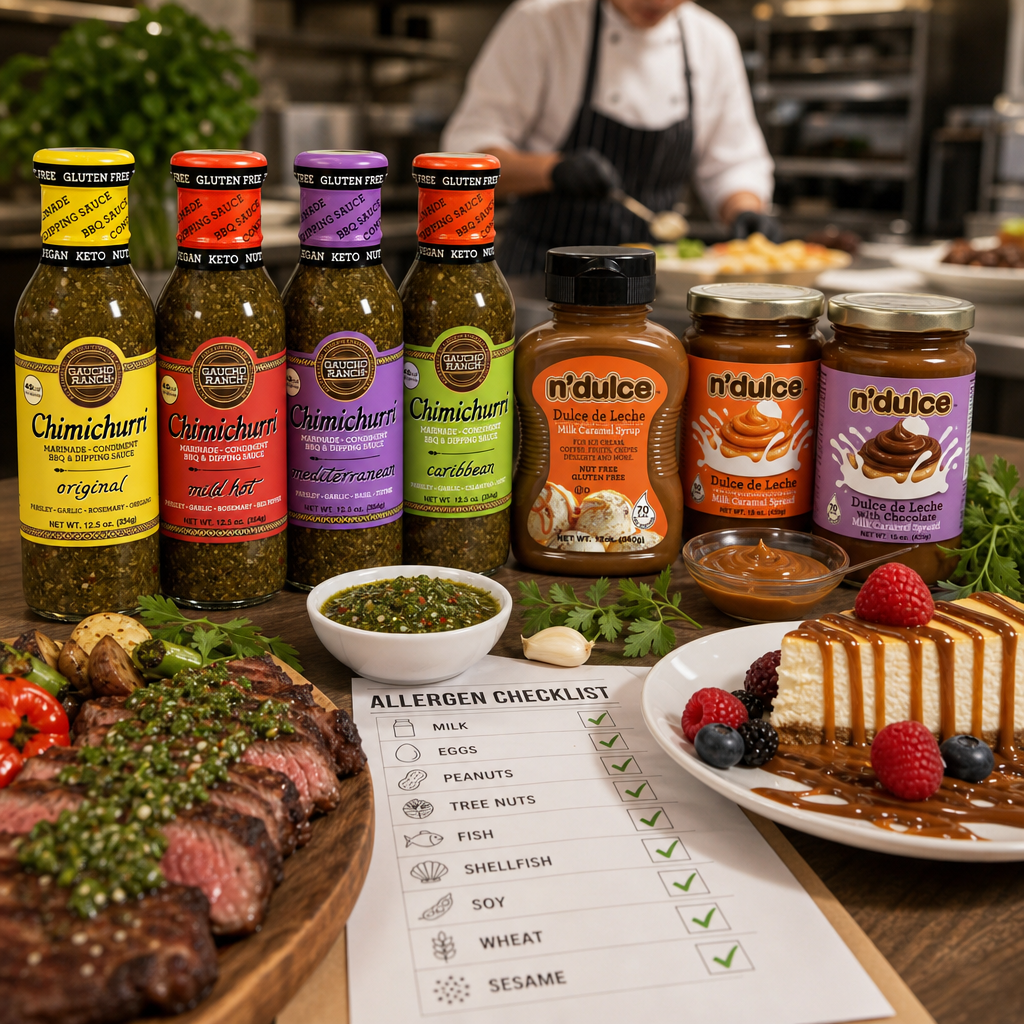
How We Simplify Your Allergen Management with Clean Labels
We design our products with allergen transparency in mind. Our Chimichurri Original Flavor and Dulce de Leche Spreadable are crafted without artificial flavors, preservatives, or hidden allergens that often complicate food service operations.
Every Cordoba Foods product carries clear allergen labeling and comes with complete ingredient transparency. We’re nut-free, gluten-free, and use only intentional ingredients you can pronounce and source trace. Our Kosher and SQF certifications mean you’re working with a manufacturer that takes safety protocols seriously at every production stage.
By partnering with us, you reduce the allergen detective work typically required with multiple suppliers. You get straightforward labels, honest ingredient lists, and direct access to our team if questions arise. This simplicity lets your staff focus on execution rather than decoding complex supplier documents.
Building a Comprehensive Allergen Control System in Your Kitchen
Start with physical separation and color-coded tools. Designate specific cutting boards, utensils, and prep areas for allergen-free items. Many kitchens use red boards and handles for allergen-containing ingredients and green for allergen-free, making visual mistakes less likely during rushed service.
Create a prep flow that protects your allergen-free dishes. If you’re plating a gluten-free meal, prepare it first before handling wheat-based items, or assign a dedicated prep station. Hand-washing between tasks isn’t optional; it’s fundamental. Train staff to change gloves, wipe surfaces, and sanitize equipment between allergen-containing and allergen-free preparations.
Document your procedures in writing. A laminated allergen control checklist at each station keeps standards consistent across shifts and staff. Include steps for ingredient verification, preparation isolation, and final verification before plates leave the kitchen.
Menu Transparency and Customer Communication Strategies
Your menu should indicate which dishes contain major allergens or note which items are allergen-free. Some establishments use symbols or asterisks linked to a detailed allergen menu; others include allergen information directly on the main menu. Either approach works as long as it’s immediately visible and accurate.
Train your front-of-house team to ask about allergies during every interaction. Make it part of the greeting: “Are you or anyone at your table managing any food allergies?” This opens conversation naturally rather than feeling like a box to check. Staff should know how to escalate questions to a manager if they’re uncertain about ingredients.
Create a clear escalation path. If a server doesn’t know whether the chimichurri contains a specific allergen, they should never guess. They should confidently say “Let me verify that for you with our kitchen” and follow through. Customers respect honesty more than confident misinformation.

Staff Training and Cross-Contamination Prevention
Allergen awareness training should happen during onboarding and be refreshed quarterly. Staff should understand the difference between an allergy (immune system reaction) and an intolerance (digestive discomfort). Both matter for your operation, but allergies carry immediate health risks.
Cover specific cross-contact scenarios in training. What happens if a server accidentally touches an allergen item and then handles a customer’s food? What if a cook uses the same tongs for multiple dishes? Walk through real kitchen situations so staff understand why protocols exist. When people see the practical reasoning, compliance improves.
Test your training by asking staff to walk you through their allergen protocols unprompted. Can they explain how you prevent cross-contact with peanuts? Do they know where the allergen menu is located? These conversations reveal gaps before they become incidents.
Documentation and Record-Keeping Best Practices
Keep supplier ingredient statements and Certificates of Analysis for every product in your inventory. Organize these in a binder or digital folder organized by product category, with dates and supplier contact information. If a recall occurs, you need to identify affected products within hours, not days.
Maintain an internal allergen matrix listing every menu item, its ingredients, and potential allergens. Update this document whenever your menu changes or you switch suppliers. Include preparation notes about cross-contact risks. This becomes the reference your staff uses and your health inspector reviews.
Document allergen training attendance with dates and topics covered. Record any customer incidents or near-misses, along with how you resolved them. This documentation proves due diligence if liability questions arise later and helps you identify recurring training gaps.
How Our Products Support Your Allergen Compliance Goals
Our condiments and sauces remove a major allergen compliance burden from your sourcing. Because we’re transparent about every ingredient, you’re not decoding mysterious supplier labels or worrying about hidden allergens in spice blends. You get authentic Argentine flavors with clean-label confidence.
Our zero-sugar and keto options open your menu to health-conscious diners with specific dietary needs, many of whom also manage allergies. Our vegan chimichurri works for guests avoiding animal products, a dietary choice that often overlaps with allergen concerns. Supporting multiple dietary needs builds customer loyalty and expands your market reach.
Bulk food service sizes mean you’re not constantly switching containers, reducing opportunities for cross-contact or labeling confusion. When you order from one trusted source with clear documentation, your staff has fewer supplier details to track and explain to customers.

Common Allergen Labeling Mistakes to Avoid
One frequent mistake is failing to disclose “may contain” or “processed in a facility” statements when allergens are genuinely present. If your tomato sauce is processed in a facility that also handles tree nuts, you must communicate that. Customers making decisions based on incomplete information can’t protect themselves.
Another error is assuming something is allergen-free because it’s a plant-based or “natural” product. Sesame oil, for example, appears in many artisanal condiments and was only added to the major allergen list in 2023. Never assume; always verify current supplier information.
Staff sometimes provide incomplete information when customers ask about allergens. Saying “no peanuts” when the customer asked about tree nuts is dangerous and inaccurate. If you’re uncertain, always connect the customer with someone who can provide complete information.
Creating an Allergen-Friendly Food Service Environment
Beyond compliance, an allergen-friendly environment signals respect for every customer’s needs. This might mean offering ingredient alternatives on your menu or clearly marking which dishes can be modified to exclude specific allergens.
Consider dedicated prep spaces for severely allergic customers during certain hours. Some establishments prep allergen-free meals first, before the main service rush, reducing cross-contact risk. This becomes a selling point for health-conscious diners who remember which restaurants took their concerns seriously.
Share your commitment publicly. Include allergen information on your website, in your dining room, and in reservation confirmations. Families managing severe allergies seek out restaurants that communicate proactively. This transparency becomes competitive advantage and builds reputation within health-conscious communities.
Partner with Us for Worry-Free Ingredient Solutions
Allergen compliance feels overwhelming when you’re sourcing from multiple suppliers with inconsistent transparency. At Cordoba Foods, we’ve designed our operations to simplify this burden for food service partners. Clean labels, complete ingredient transparency, and Kosher and SQF certifications mean you’re working with a manufacturer that speaks your language.
When you partner with us, you reduce complexity across your supply chain. Our authentic Argentine condiments support diverse menus while meeting the strictest allergen and dietary requirements your guests bring to the table.
Reach out to learn how our products support your compliance goals. Let’s talk about how we can become a trusted ingredient partner for your operation, simplifying your allergen management while delivering flavors your customers love.
Contact us for retail and foodservice inquiries at 877-240-3744