What Customers Need to Know About Nut-Free Claims
When you’re shopping for condiments or spreads for yourself or your family, allergen labels matter more than ever. But there’s a world of difference between a product that’s genuinely nut-free and one that simply carries a “may contain nuts” warning. At Cordoba Foods, we understand this distinction deeply because it shapes everything we do in our manufacturing process.
The challenge many home cooks and professional chefs face is decoding what those allergen statements actually mean. Does “may contain” mean there’s a real risk, or is it just legal caution? Is a “nut-free” label a guarantee, or merely a claim? These questions deserve clear, honest answers, especially when you’re building meals for people with severe allergies or strict dietary preferences.
We’ve spent years refining our approach to nut-free production because we know our customers depend on us. Whether you’re reaching for our Gaucho Ranch Chimichurri to marinate grass-fed beef or using N’DULCE Dulce de Leche to top a celebration dessert, you deserve to know exactly what’s in your jar and what precautions went into making it safe.
A true nut-free product is made without any tree nuts or peanuts as intentional ingredients, and critically, in a facility designed to prevent accidental cross-contact with those allergens. But not all manufacturers approach this with the same rigor.
The FDA doesn’t mandate a specific definition for “nut-free” labeling, which means different companies interpret this claim differently. Some brands avoid adding nuts to their recipes but don’t control for cross-contact in their facility. Others make the claim without extensive testing to back it up. This inconsistency puts the burden on you to research and verify.
When you see a nut-free label, ask yourself: Does the company share their manufacturing controls? Can they explain their cleaning protocols? Do they conduct independent testing? These practical questions reveal whether a claim is backed by genuine commitment or merely marketing language.
At Cordoba Foods, when we say our Gaucho Ranch Chimichurri and N’DULCE Dulce de Leche are nut-free, we mean it completely. Our entire production environment is designed to prevent nut cross-contact from the moment ingredients arrive at our facility. We don’t manufacture any nut-containing products, period. This isn’t a by-product of coincidence; it’s the foundation of how we operate.
For anyone with a severe nut allergy, this level of intentionality is essential. Your peace of mind isn’t a nice-to-have; it’s a basic right when purchasing food products. The next time you’re comparing brands, look for manufacturers who can answer your detailed questions without hesitation.
The Difference Between Nut-Free and May Contain Labels
The two statements sound like they should exist on a simple spectrum, but they represent entirely different manufacturing philosophies.
A “may contain nuts” or “processed in a facility that handles nuts” label tells you that the manufacturer either uses nuts elsewhere in their facility or can’t guarantee they’ve prevented cross-contact. This statement protects the company legally from liability if someone with a nut allergy has a reaction. It’s a cautionary statement born from honest uncertainty or mixed production environments.
A true nut-free claim, when backed by proper controls and testing, tells you something fundamentally different: this facility doesn’t process nuts at all, and the company has implemented systems to ensure no accidental exposure occurs. The difference is architectural and operational, not just semantic.
Consider what this means in practice. A bakery that makes almond croissants Monday and chocolate chip cookies Tuesday might use the same mixer for both. Even with cleaning in between, trace amounts of almond oil or nut particles could remain. That’s cross-contact. That same bakery, if they added a “may contain nuts” label to their cookies, would be being honest about their risk profile. But a dedicated facility that never works with nuts operates under an entirely different set of assumptions and safeguards.
The legal and practical implications matter here too. When a manufacturer labels a product “may contain nuts,” they’re typically covering themselves against multiple types of risk, including the possibility that their testing or cleaning protocols missed something. A nut-free manufacturer who’s invested in dedicated facilities and rigorous protocols is making a more absolute claim backed by more extensive prevention.
This distinction becomes critical when you’re feeding someone with a peanut or tree nut allergy. Many people with severe allergies will avoid anything with a “may contain” statement entirely, even if the risk is theoretically low. Our approach eliminates that worry altogether because we’ve designed our manufacturing from the ground up to be genuinely nut-free.
How Cross-Contact Happens in Food Production
Cross-contact is one of the most overlooked risks in food manufacturing, partly because it’s invisible and partly because it requires understanding production environments that most consumers never see.
Cross-contact occurs when an allergen moves from one product to another through shared equipment, surfaces, utensils, or even airborne particles. It’s different from cross-contamination, which implies intentional mixing or gross negligence. Cross-contact is the subtle, often unintentional transfer of microscopic amounts of allergen from one process to another. In a facility producing nut-containing products, preventing cross-contact requires constant vigilance.
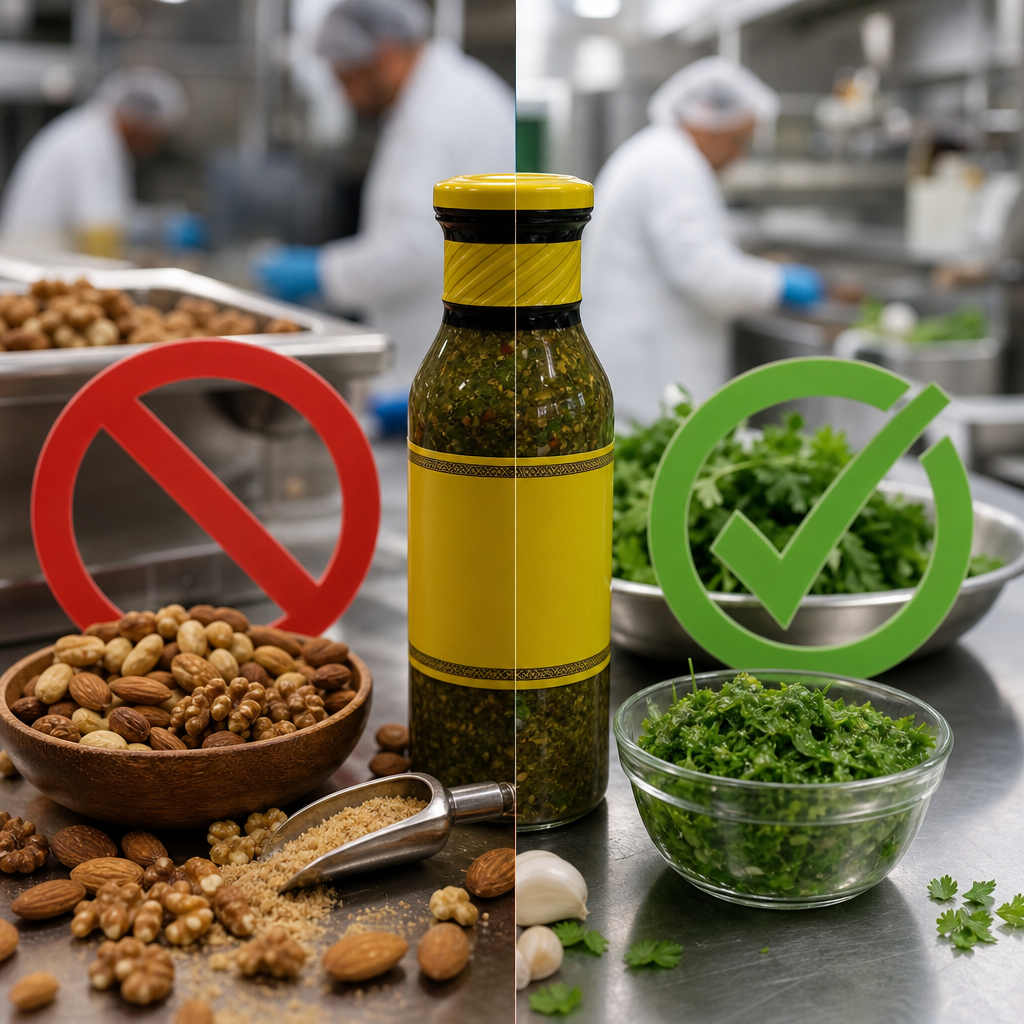
Here are the most common ways cross-contact happens:
Shared equipment is the biggest culprit. If a facility runs peanut butter in a mixer Monday morning and switches to a different sauce the next day, residual peanut oil or particles can remain even after standard cleaning. Tree nuts like almonds and walnuts are particularly problematic because they shed skin particles and oils that cling to surfaces.
Airborne particles present another risk. When you’re grinding nuts or handling products with nut ingredients, fine particles become airborne. These can settle on nearby production lines, packaging materials, or ingredients awaiting processing.
Employee cross-contact also plays a role. A worker who handles nut-containing products might touch surfaces, equipment, or packaging for other products without changing gloves or washing their hands thoroughly. This is especially risky during high-volume production days when staff move quickly.
Ingredient suppliers can introduce cross-contact too. If your vinegar or spices come from a supplier who also processes nuts, you might unknowingly receive ingredients with trace nut exposure. This is why we’re meticulous about our supply chain.
Many smaller manufacturers don’t employ dedicated nut-free production areas at all. They rely instead on the “may contain” label as their legal protection, essentially asking consumers with allergies to assume some level of risk.
Our philosophy is completely different. We’ve eliminated this risk by building a facility where nuts are never processed, period. Our ingredient suppliers understand our requirements and confirm their own nut-free status. Our equipment is dedicated to our products. Our staff works exclusively in a nut-free environment. This design prevents the problem entirely rather than merely managing it with labels.
Our Commitment to True Nut-Free Manufacturing
We’ve built our manufacturing process around a simple principle: prevent the problem, don’t manage it with warning labels.
This commitment starts with facility design. Our production environment at Cordoba Foods is entirely dedicated to nut-free products. We don’t manufacture any items containing tree nuts or peanuts. This means every piece of equipment, every surface, every process is optimized for nut-free safety from the start. There’s no “we’ll clean up after the nut batch” scenario because there is no nut batch.
Our ingredient sourcing reflects this same commitment. We work with suppliers who share our nut-free standards and can provide documentation confirming their processes. When we receive vinegar, oils, spices, and other components for our Gaucho Ranch Chimichurri and N’DULCE Dulce de Leche, we’re not just checking quality; we’re verifying the absence of cross-contact risk at the source.
Staff training is ongoing and specific. Everyone in our facility understands why nut-free production matters. They know the difference between glove-changing protocols and real allergen control. They understand that speed isn’t worth safety, and that attention to detail in cleaning and handling isn’t bureaucratic overhead; it’s the foundation of our brand promise.
Cleaning protocols in our facility go beyond industry standard. We use documented procedures with specific intervals and verification steps. After each production run, we clean equipment thoroughly, then test surfaces to ensure no residue remains. This isn’t theoretical; it’s measurable and recorded.
We’ve also chosen to be transparent about our SQF (Safe Quality Food) certification, which demonstrates that our facility meets rigorous third-party standards for food safety and allergen control. This certification isn’t handed out; it’s earned through documented systems, regular audits, and proven compliance.
For us, nut-free isn’t a marketing claim tacked onto our labels. It’s woven into how we design our facility, source our ingredients, train our people, and operate our production lines. When you choose Cordoba Foods products, you’re choosing from a manufacturer who’s aligned every operational decision around your safety.
Testing and Certification That Proves Our Standards
Claims matter, but evidence matters more. We support our nut-free commitment with rigorous, third-party verified testing and certifications.
SQF certification is our foundation. The Safe Quality Food program, administered by GFSI (Global Food Safety Initiative), establishes criteria for food safety systems. Our facility undergoes regular audits by external auditors who review our processes, test our products, and verify our controls. SQF certification requires documented allergen management plans, staff training records, supplier verification, and product testing. It’s not a one-time seal; it’s an ongoing standard we maintain through consistent compliance.
Beyond certification, we conduct allergen testing on finished products. We use validated methods to test for the presence of nut proteins in our Chimichurri sauces and Dulce de Leche products. These tests provide quantifiable evidence that our products don’t contain detectable levels of nut allergens. Testing occurs on regular production batches, not just sample batches, so the data reflects what customers are actually purchasing.
We also maintain documentation of our supplier verification protocols. Every ingredient we receive comes with confirmation that it meets our nut-free standards. This creates a chain of accountability from raw material through finished product.
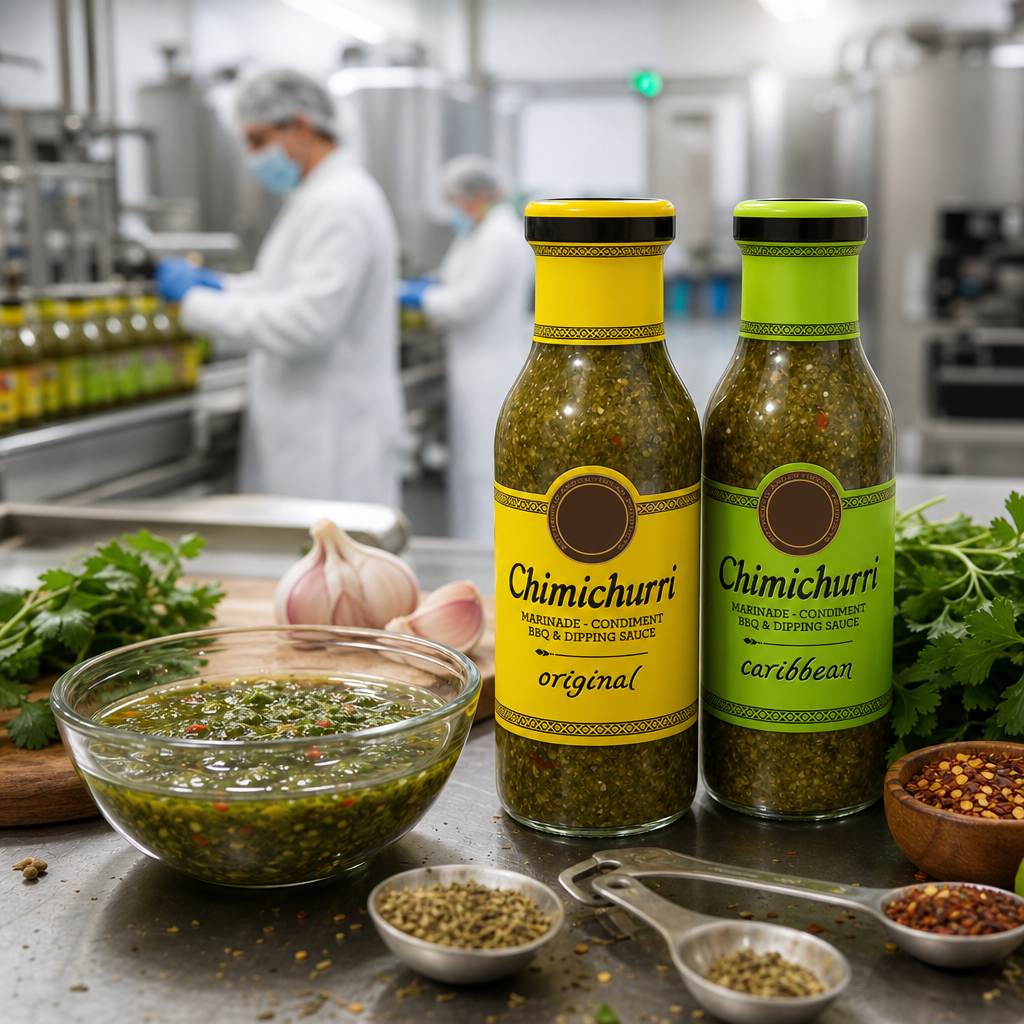
Kosher certification from a third-party certifying agency adds another layer of verification. While kosher certification focuses primarily on ingredient sourcing and facility cleanliness standards rather than allergen control specifically, it reinforces our commitment to controlled, verified production processes. Our products bearing the Kosher symbol have been inspected by professionals trained to recognize and prevent cross-contact.
The practical benefit of these certifications and tests is that you don’t have to take our word for it. You can verify our claims by checking our SQF status, reviewing our testing documentation if you request it, and confirming our certifications with the authorizing organizations. Transparency backed by third-party validation is how trust gets built in food manufacturing.
For anyone with a severe nut allergy or for professional chefs with allergic customers to serve, this layer of evidence provides confidence that goes beyond a label. You’re choosing a product from a manufacturer who’s chosen to be held accountable by external standards, not just internal promises.
Why Our Products Deliver Peace of Mind
Peace of mind might sound like an intangible benefit, but it’s actually quite practical. It means you can cook and serve food without the constant background worry about whether you’ve chosen safely.
When you’re preparing a meal for someone with a severe nut allergy, every ingredient becomes a decision point. Did I check the label? Did I call the manufacturer? Can I be sure about cross-contact? These questions can exhaust you, especially when it’s a child’s lunch or a special dinner. A genuinely nut-free product from a manufacturer who’s invested in verified, controlled processes removes a significant mental burden.
Consider a real scenario. You’re making chimichurri-marinated skewers for a family gathering. One guest has a severe peanut allergy. You reach for our Gaucho Ranch Chimichurri because you know our facility doesn’t process nuts, our suppliers are verified, and our products have been tested. You can serve with confidence, not caution. That’s the peace of mind we deliver.
For professional chefs and restaurant operators, this confidence translates to operational simplicity. You can confidently add our products to allergy-friendly menus. You can serve guests with severe restrictions without the elaborate protocols required for products from mixed facilities. You reduce your liability because you’re sourcing from a manufacturer with documented, verified controls. One less thing to worry about during service.
For bakeries and ice cream makers using our N’DULCE Dulce de Leche, the same principle applies. Your customers with nut allergies can enjoy your products without hesitation. You can label menu items with confidence. You’re building trust through the quality of your ingredient sourcing.
The operational benefit also includes simpler purchasing decisions. You’re not juggling multiple suppliers or comparing “may contain” risk profiles. You choose Cordoba Foods for true nut-free products, and you move forward knowing your safety requirements are met.
Peace of mind extends to labeling and communication too. When you’re serving or selling our products, you can confidently state they’re nut-free without qualification. You don’t have to hedge with “may contain” disclaimers. That clarity matters to your customers and to anyone with a serious allergy.
Comparing Manufacturing Practices: Where Safety Starts
Not all nut-free claims are created equal. The difference lies in how manufacturers have organized their operations to support that claim.
Some manufacturers take the “label and pray” approach. They make products without adding nuts, but they don’t invest in dedicated equipment or rigorous controls. They rely on the “may contain” label to protect them legally. This approach is inexpensive and doesn’t require facility redesign, but it leaves actual risk on the table.
Others maintain mixed facilities with separate production lines. They might make nut-free products on one line and nut-containing products on another, with physical separation. This is better than co-mingling, but it still requires extensive cleaning protocols and creates ongoing risk of cross-contact if procedures slip.
The gold standard, which is our approach, is a entirely dedicated nut-free facility. No nuts are processed anywhere in the building. No cross-contact risk exists by design, not by protocol. This requires investment in facility design, separate equipment, dedicated staff, and sustained operational discipline, but it eliminates the class of problem rather than merely managing it.
The cost difference between these approaches is significant. A “may contain” manufacturer has lower operational costs. A mixed-facility manufacturer absorbs costs from equipment maintenance and frequent cleaning. A dedicated nut-free facility represents the highest investment but delivers the highest assurance.
Why do we choose the most demanding approach? Because we believe your safety isn’t a cost to minimize; it’s a foundation to build on. When someone chooses Cordoba Foods, they’re choosing from a company that’s made operational choices specifically to protect them.
This difference becomes apparent when you ask manufacturers detailed questions. Can they explain their facility layout? Can they show you supplier documentation? Can they discuss their testing protocols? Manufacturers with genuine control can answer comprehensively. Those relying on the “may contain” label often become vague or defensive when pressed.
For restaurants and professional food operations, this distinction affects your liability and your ability to serve allergic customers confidently. For home cooks, it affects which products you can confidently use in shared kitchens or when serving guests with severe allergies.
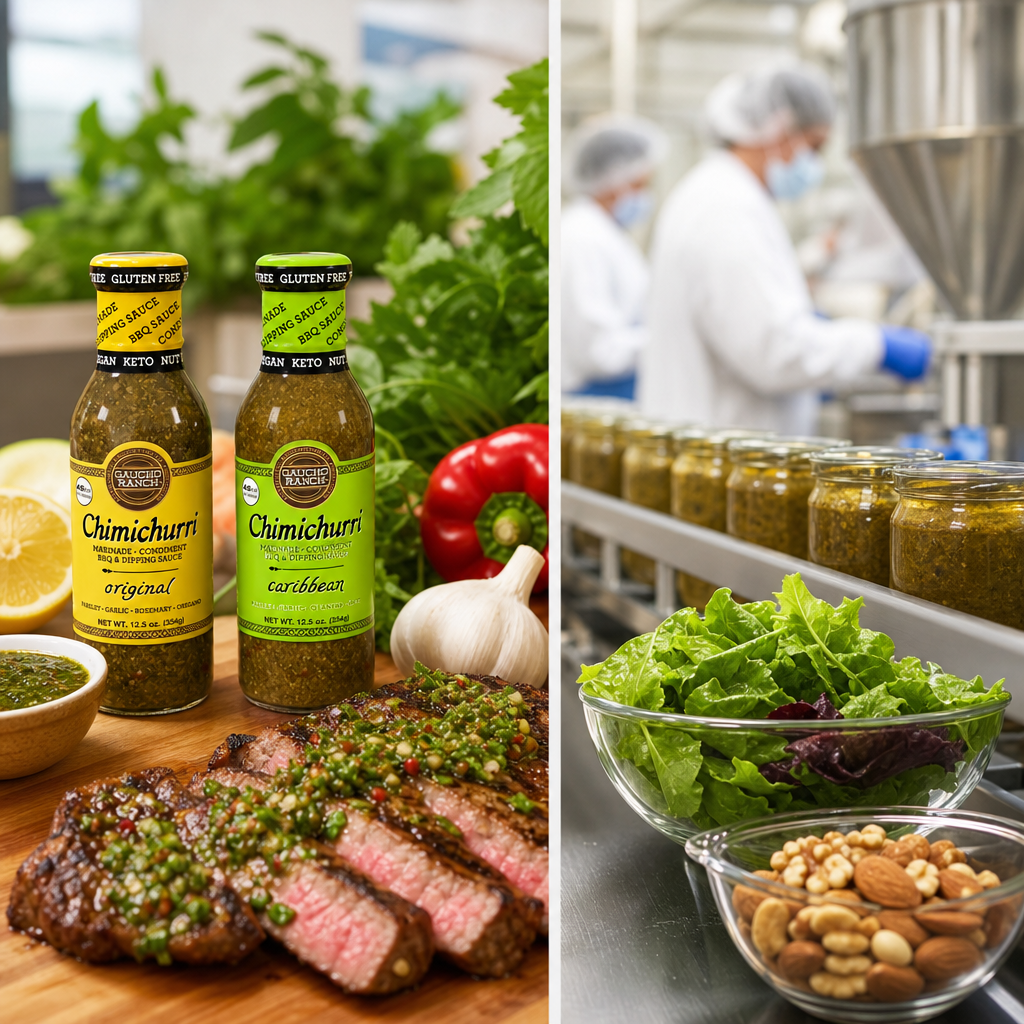
Our manufacturing practices exist to deliver the assurance level you deserve.
Real-World Applications for Your Kitchen and Recipes
Understanding nut-free safety matters most when you’re actually using products in recipes and meals. Let’s walk through how our Chimichurri and Dulce de Leche fit into real cooking scenarios where nut allergies matter.
Our Gaucho Ranch Chimichurri works beautifully as a marinade for any grilled protein. The fresh parsley, garlic, and vinegar base pairs with beef, chicken, or lamb without introducing cross-contact concerns. Since the sauce is shelf-stable with a 12-month shelf life, you can keep it on hand for weeknight cooking or entertaining. When you’re hosting a dinner with allergic guests, you can confidently use it as a condiment or finishing touch without dietary worries limiting your menu.
The same sauce works as a pizza topping, which matters if you’re cooking for a group with mixed dietary needs. Your nut-allergy friends can enjoy the same meal as everyone else. It’s a simple way to ensure inclusive cooking without creating separate dishes or making anyone feel accommodated in an awkward way.
For dipping applications, the original and milder versions work well with fresh vegetables or cured meats at a charcuterie board. You’re not limited to nut-free main dishes; you can approach the entire meal inclusively.
Our N’DULCE Dulce de Leche opens up multiple applications depending on which consistency you choose. The spreadable version works perfectly as a cake filling or pastry topping for bakeries and home bakers. Imagine a tres leches cake topped with dulce de leche, served to guests with nut allergies without any special precautions or worry. The bakeable version, which is heat-resistant, works in cookie fillings and can be baked into pastries without breaking down or creating texture problems.
For churro makers and donut shops, our dulce de leche offers a clean-label, nut-free filling option that you can confidently highlight on your menu. You’re broadening your customer base to include anyone with a nut allergy, which represents a significant market segment.
Ice cream makers can use any of our dulce de leche consistencies as a base or swirl for flavored scoops. A salted dulce de leche ice cream from a nut-free source becomes a product you can market confidently to allergy-conscious customers.
At home, having a quality nut-free dulce de leche on hand means you can make spontaneous desserts without cross-contact concerns. Top vanilla yogurt for a quick breakfast. Drizzle over fresh fruit. Layer into brownies. The applications expand when you trust your ingredient source.
The practical benefit of working with our products is that your nut-free cooking doesn’t feel like cooking around a restriction; it feels like working with a quality ingredient that happens to be safe for your needs. That’s the difference between accommodation and inclusion.
Making the Right Choice for Your Dietary Needs
When you’re standing in the condiment aisle or shopping for ingredients for your professional kitchen, you’re making a choice that extends beyond flavor and quality, though both matter deeply to us.
You’re deciding how much assurance you want about what’s actually in your food. You’re choosing a manufacturer whose values align with your commitment to safety. You’re supporting a company’s approach to operational integrity.
For anyone with a nut allergy, whether you’re cooking for yourself or serving others, this choice is serious. A “may contain nuts” label means you’re accepting some level of uncertainty. You’re trusting a manufacturer to manage risk through cleaning protocols and testing, but you’re also accepting that their operational design allows nuts to be processed somewhere in their facility. That acceptance might be reasonable for your risk tolerance, but it’s a choice you’re making.
When you choose a truly nut-free product from a dedicated facility, you’re choosing elimination over management. You’re choosing a manufacturer who’s decided that your safety justifies the investment in facility design, ingredient sourcing, and operational discipline. You’re no longer monitoring risk; you’re trusting a system designed to prevent it.
Cordoba Foods exists to be that choice for you. Our Gaucho Ranch Chimichurri and N’DULCE Dulce de Leche are manufactured in a facility where nuts are never processed. Our suppliers are verified. Our products are tested. Our processes are certified by third-party auditors. Our commitment is comprehensive and documented.
When you choose our products, you’re not choosing a compromise or a workaround. You’re choosing from a manufacturer who’s aligned every operational decision with your safety needs. You’re choosing quality ingredients combined with genuine nut-free integrity. You’re choosing a family-owned company that understands that trust is earned through transparency and verified practice, not just marketing language.
Whether you’re a home cook preparing meals for your family, a professional chef building inclusive menus, or a bakery or ice cream maker expanding your customer base, our products offer the assurance you need combined with the authentic flavor and quality you deserve. That’s not just a label; that’s a commitment we’ve built into everything we do.
Contact us for retail and foodservice inquiries at 877-240-3744